Dangote Cement, Sinoma Sign $1bn Strategic Agreement to Expand Cement Projects Across Africa

Table of Content

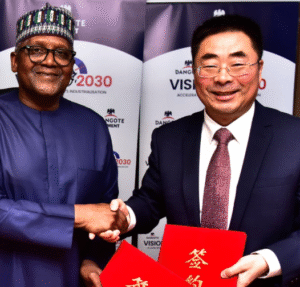
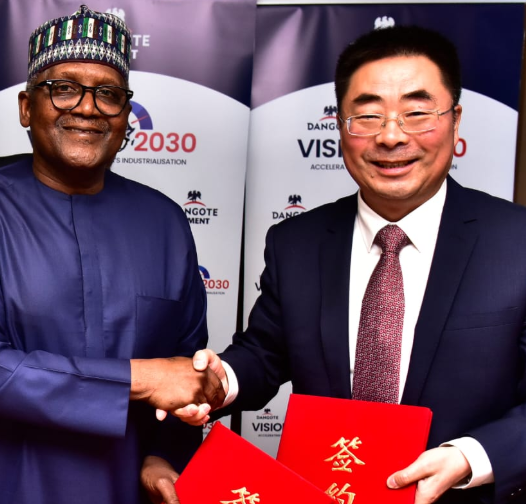
Dangote Cement has entered into a landmark $1 billion strategic partnership with Sinoma International Engineering aimed at accelerating the development and expansion of cement production projects across

multiple African countries, reinforcing growing industrial cooperation between African and Chinese firms while addressing rising infrastructure demand on the continent.

The agreement focuses on engineering, procurement, and construction support for new cement plants as well as upgrades to existing facilities, positioning the partnership as one of the most significant industrial collaborations in Africa’s building materials sector in recent years. The deal is expected to strengthen production capacity, improve operational efficiency, and support Dangote Cement’s long-term strategy of expanding its manufacturing footprint beyond Nigeria into key regional markets.

Officials from both companies described the partnership as a strategic move designed to meet Africa’s rapidly increasing demand for cement driven by urbanization, population growth, and large-scale infrastructure projects. Across the continent, governments continue to invest heavily in roads, housing, rail systems, and energy infrastructure, all of which rely heavily on steady cement supply. Industry analysts say expanding local production capacity could reduce dependence on imports while stabilizing prices in fast-growing economies.

Under the agreement, Sinoma International Engineering will provide advanced technical expertise, plant design solutions, and construction management services. The Chinese firm is widely recognized for delivering large-scale cement production facilities globally, particularly in emerging markets. By leveraging Sinoma’s engineering capabilities, Dangote Cement aims to deploy modern production technologies that improve energy efficiency and reduce operational costs.

For Dangote Cement, the investment aligns with its ambition to maintain leadership as Africa’s largest cement producer while deepening regional integration through manufacturing expansion. The company already operates plants in several African countries, and the new projects are expected to enhance cross-border supply networks, strengthen local employment opportunities, and stimulate industrial development in host economies.

The partnership also reflects a broader trend of increasing China–Africa industrial cooperation shifting from raw material trade toward manufacturing and infrastructure development. Rather than focusing solely on resource extraction, recent collaborations emphasize technology transfer, industrial capacity building, and long-term production investment. Analysts note that such partnerships could play a crucial role in advancing Africa’s industrialization agenda by creating value-added industries within the continent.

Economic observers highlight that cement production remains a critical indicator of development activity. Rising cement demand often signals expanding construction sectors and growing urban economies. By investing heavily in new capacity, Dangote Cement is effectively positioning itself to benefit from Africa’s projected population growth and urban expansion over the coming decades.

The agreement is also expected to incorporate sustainability considerations, including more energy-efficient production systems and reduced emissions technologies, as environmental standards increasingly shape industrial investment decisions worldwide. Modern cement plants designed with improved efficiency can significantly lower fuel consumption and operational emissions compared with older facilities.

Market reactions have been broadly positive, with analysts viewing the deal as evidence of continued investor confidence in Africa’s long-term economic prospects despite short-term global uncertainties. Large-scale industrial investments of this nature typically generate multiplier effects, supporting logistics, construction, and service sectors around new manufacturing hubs.

Beyond commercial objectives, the partnership carries symbolic importance as well. It demonstrates how African companies are increasingly leading major industrial projects while forming global alliances that bring technical expertise and financing together. The collaboration highlights the evolving role of African multinationals as key drivers of continental development rather than passive recipients of foreign investment.

As implementation begins, attention will turn to project timelines, host country participation, and the broader economic impact across regions where new facilities are planned. If successfully executed, the $1 billion agreement could significantly reshape cement production capacity in Africa, helping to meet infrastructure needs while reinforcing industrial growth across one of the world’s fastest-developing regions.

support@paulkizitoblog.com

support@paulkizitoblog.com http://paulkizitoblog.com

Leave a Reply

Your email address will not be published. Required fields are marked *

Recent News

Trending News

Editor's Picks

Dangote Cement, Sinoma Sign $1bn Strategic Agreement to Expand Cement Projects Across Africa

Dangote Cement has entered into a landmark $1 billion strategic partnership with Sinoma International Engineering aimed at accelerating the development and expansion of cement production projects across multiple African countries, reinforcing growing industrial cooperation between African and Chinese firms while addressing rising infrastructure demand on the continent. The agreement focuses on engineering, procurement, and construction support for new cement plants as well as upgrades to existing facilities, positioning the partnership as one of the most significant industrial collaborations in Africa’s building materials sector in recent years. The deal is expected to strengthen production capacity, improve operational efficiency, and support Dangote Cement’s long-term strategy of expanding its manufacturing footprint beyond Nigeria into key regional markets. Officials from both companies described the partnership as a strategic move designed to meet Africa’s rapidly increasing demand for cement driven by urbanization, population growth, and large-scale infrastructure projects. Across the continent, governments continue to invest heavily in roads, housing, rail systems, and energy infrastructure, all of which rely heavily on steady cement supply. Industry analysts say expanding local production capacity could reduce dependence on imports while stabilizing prices in fast-growing economies. Under the agreement, Sinoma International Engineering will provide advanced technical expertise, plant design solutions, and construction management services. The Chinese firm is widely recognized for delivering large-scale cement production facilities globally, particularly in emerging markets. By leveraging Sinoma’s engineering capabilities, Dangote Cement aims to deploy modern production technologies that improve energy efficiency and reduce operational costs. For Dangote Cement, the investment aligns with its ambition to maintain leadership as Africa’s largest cement producer while deepening regional integration through manufacturing expansion. The company already operates plants in several African countries, and the new projects are expected to enhance cross-border supply networks, strengthen local employment opportunities, and stimulate industrial development in host economies. The partnership also reflects a broader trend of increasing China–Africa industrial cooperation shifting from raw material trade toward manufacturing and infrastructure development. Rather than focusing solely on resource extraction, recent collaborations emphasize technology transfer, industrial capacity building, and long-term production investment. Analysts note that such partnerships could play a crucial role in advancing Africa’s industrialization agenda by creating value-added industries within the continent. Economic observers highlight that cement production remains a critical indicator of development activity. Rising cement demand often signals expanding construction sectors and growing urban economies. By investing heavily in new capacity, Dangote Cement is effectively positioning itself to benefit from Africa’s projected population growth and urban expansion over the coming decades. The agreement is also expected to incorporate sustainability considerations, including more energy-efficient production systems and reduced emissions technologies, as environmental standards increasingly shape industrial investment decisions worldwide. Modern cement plants designed with improved efficiency can significantly lower fuel consumption and operational emissions compared with older facilities. Market reactions have been broadly positive, with analysts viewing the deal as evidence of continued investor confidence in Africa’s long-term economic prospects despite short-term global uncertainties. Large-scale industrial investments of this nature typically generate multiplier effects, supporting logistics, construction, and service sectors around new manufacturing hubs. Beyond commercial objectives, the partnership carries symbolic importance as well. It demonstrates how African companies are increasingly leading major industrial projects while forming global alliances that bring technical expertise and financing together. The collaboration highlights the evolving role of African multinationals as key drivers of continental development rather than passive recipients of foreign investment. As implementation begins, attention will turn to project timelines, host country participation, and the broader economic impact across regions where new facilities are planned. If successfully executed, the $1 billion agreement could significantly reshape cement production capacity in Africa, helping to meet infrastructure needs while reinforcing industrial growth across one of the world’s fastest-developing regions. support@paulkizitoblog.com