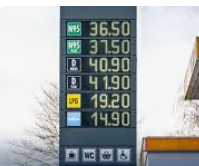
Diesel prices in the Czech Republic have surged to their highest level in four years, adding fresh pressure on households and businesses already navigating a volatile economic environment.
Rising costs at the pump
Drivers across the country are now paying significantly more for diesel than they were just months ago. The increase has been steady but sharp, pushing fuel costs to levels not seen since the early 2020s.
What’s behind the spike
The surge is being driven largely by forces beyond the country’s borders:
- Higher global crude oil prices
- Supply uncertainties affecting European energy flows
- Continued dependence on imported fuel
As a landlocked country, the Czech Republic is particularly exposed to disruptions in regional supply chains, making domestic prices sensitive to external shocks.
Pressure on businesses and consumers
Transport companies, farmers, and manufacturers—many of whom rely heavily on diesel—are among the hardest hit. Rising fuel costs are also feeding into broader inflation, affecting the price of goods and services.
For everyday consumers, the impact is visible not just at petrol stations, but in higher costs of living across sectors.
Government response
Authorities have introduced measures aimed at softening the blow, including adjustments to fuel taxation and efforts to monitor pricing practices. These steps are intended to limit excessive increases while maintaining supply stability.
A wider European trend
The Czech Republic’s situation mirrors a broader pattern across Europe, where energy markets remain highly sensitive to geopolitical tensions and supply constraints.
The bigger picture
While the current spike may ease if global conditions stabilize, it highlights an ongoing challenge: balancing short-term energy needs with long-term resilience. Until alternatives are fully scaled, countries like the Czech Republic will remain vulnerable to swings in global fuel markets.