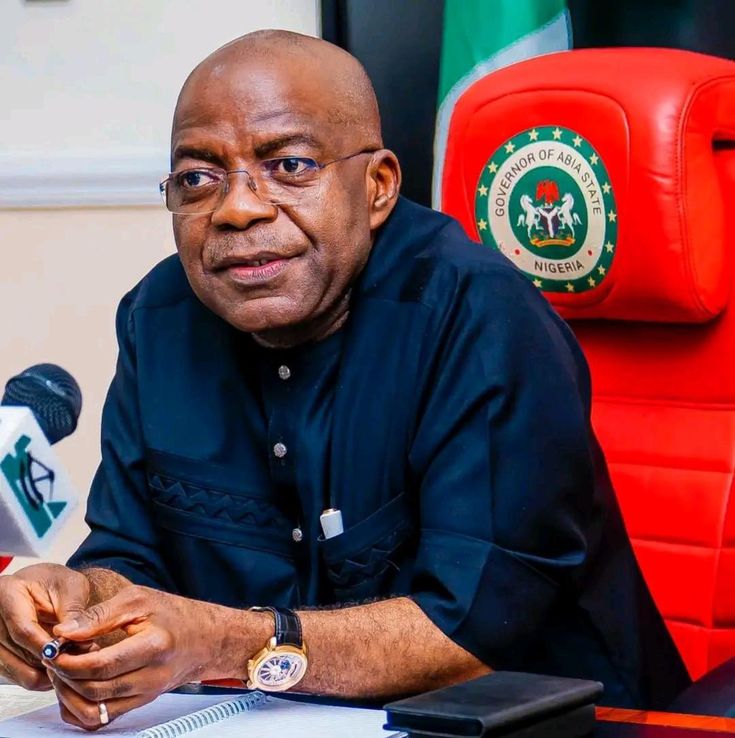
The quiet symbolism of tradition meeting reform played out meaningfully in Abia State during the Christmas season, as the 14th Emir of Kano, Muhammadu Sanusi II, paid a private yet consequential visit to the state, commending the achievements of Governor Alex Chioma Otti and choosing Abia as his place of rest and reflection for the festivities. Beyond the ceremonial optics, the visit underscored a deeper national conversation about governance, accountability, and the moral architecture of leadership in contemporary Nigeria.
Emir Sanusi’s presence in Abia was neither accidental nor merely social. Known for his intellectual rigor, reformist ethos, and unwavering insistence on fiscal discipline, the former Central Bank Governor has long been selective about the public leaders he openly praises. His commendation of Governor Otti therefore carries substantial weight, especially in a polity where public trust in leadership has been repeatedly strained by underperformance and institutional decay.
Governor Otti’s administration, though still relatively young, has distinguished itself through a visible recalibration of governance priorities in Abia State. Infrastructure renewal, civil service reform, improved transparency in public finance, and the restoration of dignity to public institutions have become defining features of his tenure. Emir Sanusi’s acknowledgment of these strides reflects an alignment of values: a shared belief that governance must be grounded in competence, prudence, and moral clarity rather than populist rhetoric or political expediency.
Historically, Nigerian political culture has often rewarded noise over nuance and loyalty over merit. Yet the interaction between the Emir and the Abia governor represents a counter-narrative—one in which leadership is evaluated not by spectacle but by substance. Sanusi, steeped in both Islamic jurisprudence and modern economic thought, has consistently argued that development is impossible where leadership lacks ethical direction. His praise of Otti implicitly affirms that Abia is charting a course anchored in responsible stewardship.
The decision of the Emir to spend Christmas in Abia is itself symbolically rich. In a nation frequently polarized along ethnic and religious lines, such gestures reaffirm the possibility of unity rooted in mutual respect. Sanusi’s participation in a Christian festive period within a predominantly Christian state demonstrates that Nigeria’s diversity need not be a fault line; rather, it can be a foundation for shared national purpose. As Cicero observed, “The good of the people is the greatest law.” When leaders transcend sectarian boundaries, they reaffirm this timeless maxim.
From a governance perspective, Abia’s evolving narrative offers important lessons for subnational leadership across Nigeria. The Otti administration has emphasized fiscal realism—paying down inherited obligations, curbing waste, and insisting on value for public expenditure. These measures, while often unpopular in the short term, are essential for sustainable development. Emir Sanusi’s endorsement serves as an external validation of these policy choices, reinforcing the principle that economic reform, though arduous, remains indispensable.
There is also a legal and constitutional dimension to this moment. Nigeria’s federal system places immense responsibility on state governors as chief executives within their jurisdictions. The Latin maxim delegatus non potest delegare reminds us that power entrusted must be exercised responsibly, not abdicated. In commending Otti, Sanusi appears to recognize a governor who understands the weight of constitutional authority and the necessity of deploying it for the public good rather than personal gain.
Moreover, the visit subtly reframes the role of traditional institutions in modern governance. While monarchs no longer wield formal political power, their moral influence remains significant. When exercised judiciously—as in this case—it can encourage good governance and discourage excess. Sanusi’s engagement with Abia’s leadership illustrates how traditional authority can complement democratic institutions without undermining them.
As Nigeria confronts economic headwinds, social fragmentation, and institutional fatigue, moments like this matter. They remind citizens that credible leadership is still possible, that excellence can be recognized across regional boundaries, and that reform is not an abstract ideal but a lived practice. Governor Otti’s governance trajectory, now publicly acknowledged by one of Nigeria’s most respected public intellectuals, reinforces the argument that competence remains the most radical political currency.
In the final analysis, Emir Sanusi’s Christmas sojourn in Abia was more than a seasonal visit; it was a quiet statement about the kind of Nigeria that can emerge when integrity meets opportunity. For Abia, it is both an affirmation and a challenge—to sustain momentum and deepen reform. For Nigeria at large, it is a reminder that leadership, when rightly exercised, still commands respect across faiths, cultures, and regions.
References
The Nation. (2025, December 28). Emir Sanusi commends Otti’s achievements, spends Christmas in Abia.
https://thenationonlineng.net/emir-sanusi-commends-ottis-achievements-spends-christmas-in-abia/
National Ambassador Nigeria. (2025, December). Emir of Kano commends Gov. Otti, calls for national unity.
https://nationalambassadorngr.com/emir-of-kano-commends-gov-otti-calls-for-national-unity/
ThisDayLive. (2025, December 27). Otti: Abia College of Education had more teachers than students when I assumed office.
https://www.thisdaylive.com/2025/12/27/otti-abia-college-of-education-had-more-teachers-than-students-when-i-assumed-office/
TheCable. (2024, January 19). Full list: Otti names Okonjo-Iweala, Sanusi as members of Abia economic advisory council.
https://www.thecable.ng/full-list-otti-names-okonjo-iweala-sanusi-as-members-of-abia-economic-advisory-council/
Vanguard. (2025, October). Sanusi, Peterside challenge leaders on accountability, economic discipline.
https://www.vanguardngr.com/2025/10/sanusi-peterside-challenge-leaders-on-accountability-economic-discipline/
Alex Otti Official Website. (2025). Governor Otti signs into law, unveils Abia State 25-Year Development Plan (2025–2050).
https://www.alexotti.com/gov-otti-signs-into-law-unveils-abia-state-25-years-development-plan-2025-2050/
Sanusi, M. S. II. (2017). Islam, economics and governance. Kano: Khalifa Sanusi II Foundation.
(Used for contextual background on leadership ethics and fiscal discipline.)
Federal Republic of Nigeria. (1999). Constitution of the Federal Republic of Nigeria (as amended).
https://nigerialaw.org/constitutionofthefederalrepublicofnigeria.htm