Recent remarks by NATO’s secretary general have reignited an uncomfortable but necessary conversation: despite years of investment and ambition, Europe is not yet in a position to guarantee its own security without substantial support from the United States.
The warning was not framed as criticism, but as realism. NATO leaders have repeatedly emphasized that collective defence depends not only on political unity, but on concrete military capabilities—and in several critical areas, Europe continues to rely heavily on Washington.
The Gap Between Commitment and Capability
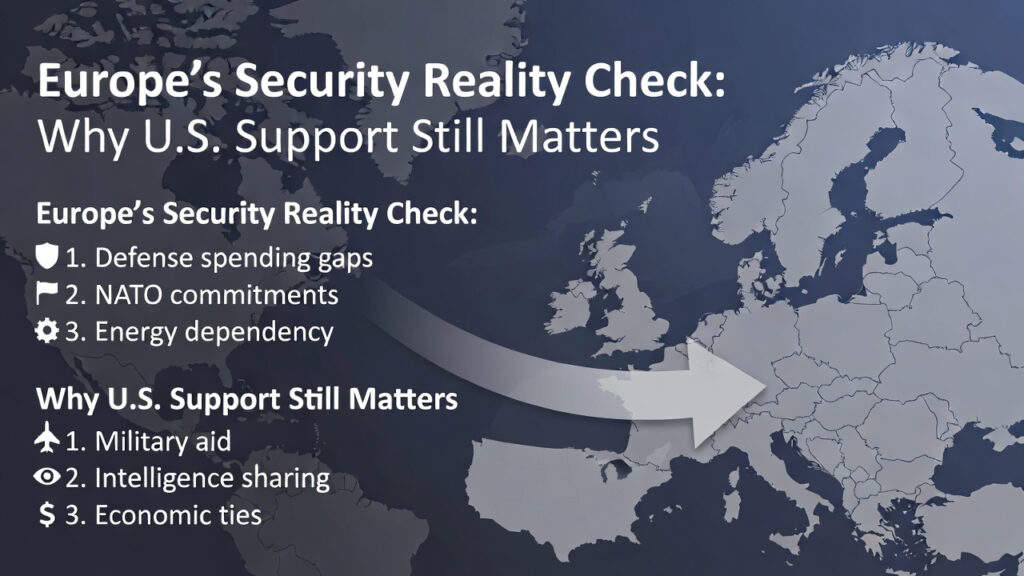
European nations have made clear pledges to strengthen their defence spending, particularly since Russia’s invasion of Ukraine reshaped the continent’s security environment. Many countries have increased budgets, expanded training, and modernized equipment.
Yet capability gaps remain. Strategic airlift, missile defence, intelligence, surveillance, reconnaissance, cyber defence, and nuclear deterrence are areas where U.S. assets continue to play an outsized role. Without them, Europe’s ability to respond quickly and decisively to major threats would be significantly reduced.
The NATO chief’s message was blunt but factual: ambition alone does not replace readiness.
Why the Transatlantic Link Still Anchors NATO
The United States is not just another NATO member—it is the alliance’s central enabler. Its military scale, global reach, and logistical capacity form the backbone of deterrence, particularly on NATO’s eastern flank.
U.S. involvement also sends a powerful political signal. It reinforces the credibility of NATO’s Article 5 commitment, making potential adversaries think twice before testing the alliance’s resolve. That deterrent effect depends on visible, sustained American engagement.
From this perspective, the warning was less about dependency and more about deterrence credibility.
European Autonomy vs. Strategic Reality
Calls for greater European “strategic autonomy” are not new, and they are not incompatible with NATO membership. In fact, stronger European forces would reduce strain on the alliance as a whole and create a more balanced partnership with the United States.
But autonomy is a long-term project, not a switch that can be flipped. Building integrated command structures, shared procurement systems, and deployable forces takes time, coordination, and political will—especially in a continent with diverse threat perceptions and national priorities.
Until those systems mature, U.S. support remains indispensable.
A Warning Meant to Strengthen, Not Divide
Importantly, the NATO chief’s comments were not a call for European complacency. Quite the opposite. They were intended to accelerate defence investment, improve readiness, and close gaps that have been acknowledged for years.
The underlying message was clear: Europe must do more—but pretending it can already do without the United States risks weakening, not strengthening, the alliance.
The Stakes Are High
At a time of renewed geopolitical tension, alliance cohesion matters as much as hardware. Any perception of fragmentation or reduced commitment could embolden adversaries and undermine deterrence.
By openly addressing defence shortfalls, NATO leadership is attempting to prevent strategic miscalculation—both within the alliance and beyond it.
Looking Ahead
Europe’s defence future will likely involve greater responsibility, deeper integration, and higher spending. That trajectory is already underway. But for now, transatlantic cooperation remains the foundation of European security.
Acknowledging that reality is not a sign of weakness. It is a prerequisite for honest planning—and for ensuring that NATO remains credible in an increasingly unstable world.