Farmers in eastern Rwanda are playing an increasingly important role in efforts to restore forests and rehabilitate degraded land, as the country pushes forward with ambitious environmental and climate resilience goals.
Years of deforestation, population pressure, and climate change have left large areas of Rwanda’s Eastern Province vulnerable to drought and soil degradation. To reverse the trend, authorities and environmental organizations are focusing on community-driven restoration programmes that place farmers at the center of conservation efforts.
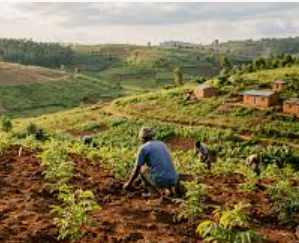
Across districts such as Kirehe, Ngoma, and Nyagatare, smallholder farmers are planting trees on their farms and organizing into cooperatives to manage forest restoration projects. Through these initiatives, communities are helping to regenerate natural landscapes while improving agricultural productivity and income.
Many farmers are adopting agroforestry practices, which combine trees with crops and livestock on the same land. This approach improves soil fertility, reduces erosion, and creates shade that helps crops survive in harsh weather conditions. Trees also provide additional resources such as fruits, fodder for animals, and firewood, reducing pressure on natural forests.
In Kirehe District, farmer groups have already planted trees across dozens of hectares of land, with women making up a significant portion of participants in the restoration programmes. Community members say the projects have helped revive degraded land while offering new economic opportunities.
Beekeeping is also being introduced alongside tree planting. Flowering trees attract bees, allowing farmers to produce honey while contributing to biodiversity and pollination, which benefits surrounding crops.
The restoration work forms part of a broader national strategy to strengthen climate resilience in the drought-prone eastern region. Through major environmental programmes, Rwanda aims to restore tens of thousands of hectares of degraded land while promoting sustainable farming techniques.
Agroforestry accounts for the majority of restored areas so far, reflecting the government’s focus on integrating conservation with agriculture rather than separating farmland from forests.
Farmers in Nyagatare District are also planting fast-growing, climate-resilient tree species that provide livestock fodder and help maintain soil nutrients. These trees not only support farming but also help capture carbon and stabilize the local ecosystem.
Beyond environmental gains, restored forests are helping revive traditional resources used by rural communities, including medicinal plants and wild fruits. The return of trees is also improving habitats for birds and pollinators that play a crucial role in food production.
Rwanda has set ambitious targets to expand its forest cover as part of national development and climate commitments. Millions of trees are planted across the country each year, with the Eastern Province emerging as one of the key areas for restoration.
Officials say empowering farmers as stewards of the land will remain central to Rwanda’s long-term environmental strategy, ensuring that forest restoration also delivers sustainable livelihoods for rural communities.