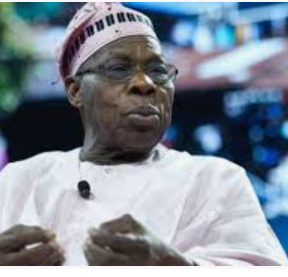
Former Nigerian Leader, President Olusegun Obasanjo has stated that poor leadership continues to be the biggest obstacle to development across African nations, arguing that the continent possesses abundant resources and human capacity but continues to struggle due to governance failures.
Speaking during a public engagement on Africa’s development challenges, the former Nigerian leader said many countries on the continent have not been able to translate their natural wealth into sustainable economic growth because of leadership deficiencies at various levels of government.
According to Obasanjo, Africa is not lacking in potential. The continent holds vast reserves of natural resources, a rapidly growing population, and enormous agricultural and technological opportunities. However, he noted that these advantages have often been undermined by leaders who fail to prioritize national development, accountability, and long-term planning.
He explained that good leadership is essential for building strong institutions, managing national resources responsibly, and ensuring that public policies serve the interests of citizens rather than narrow political interests. Without these foundations, he warned, even the most resource-rich countries may continue to struggle with poverty and slow development.
Obasanjo emphasized that leadership goes beyond occupying political offices, noting that it involves vision, discipline, and a commitment to improving the lives of citizens. He added that leaders must be willing to make difficult decisions that strengthen governance systems and promote inclusive economic growth.
The former president also pointed out that many African countries have experienced repeated cycles of political instability and economic mismanagement, which have slowed progress despite decades of independence. In his view, these challenges often stem from leadership structures that lack transparency, accountability, and effective public service delivery.
Africa, he said, has the capacity to compete with other regions of the world if its leadership focuses on strengthening democratic institutions, improving education systems, and promoting economic policies that encourage innovation and entrepreneurship.
Obasanjo further argued that corruption and weak governance structures have played a major role in limiting development across the continent. When public funds are mismanaged or diverted, he said, governments are unable to invest adequately in critical sectors such as infrastructure, healthcare, and education.
He noted that countries that have achieved significant development gains often share common characteristics, including strong institutions, respect for the rule of law, and leadership that prioritizes national progress over personal or political gain.
The former Nigerian leader urged emerging political leaders across Africa to learn from both the successes and failures of past administrations. According to him, the future of the continent depends on a new generation of leaders who are committed to transparency, innovation, and responsible governance.
He also stressed the importance of regional cooperation among African countries, noting that shared challenges such as security threats, economic instability, and climate change require coordinated solutions. By working together, African nations can strengthen their collective bargaining power in global economic and political systems.
Obasanjo has long been an influential voice in discussions about Africa’s development and governance. Since leaving office, he has participated in numerous international forums and initiatives focused on peacebuilding, democratic governance, and economic growth across the continent.
During his remarks, he encouraged African citizens to hold their leaders accountable and actively participate in democratic processes. According to him, responsible leadership can only thrive when citizens remain engaged and demand transparency and performance from those in power.
The former president concluded that Africa’s future ultimately depends on the quality of leadership guiding its institutions and development strategies. With effective governance, he said, the continent has the potential to achieve significant economic progress and improve living standards for its growing population.
Obasanjo’s comments add to ongoing debates about governance and development in Africa, where many analysts agree that leadership quality remains a critical factor influencing economic growth, political stability, and social progress across the region.