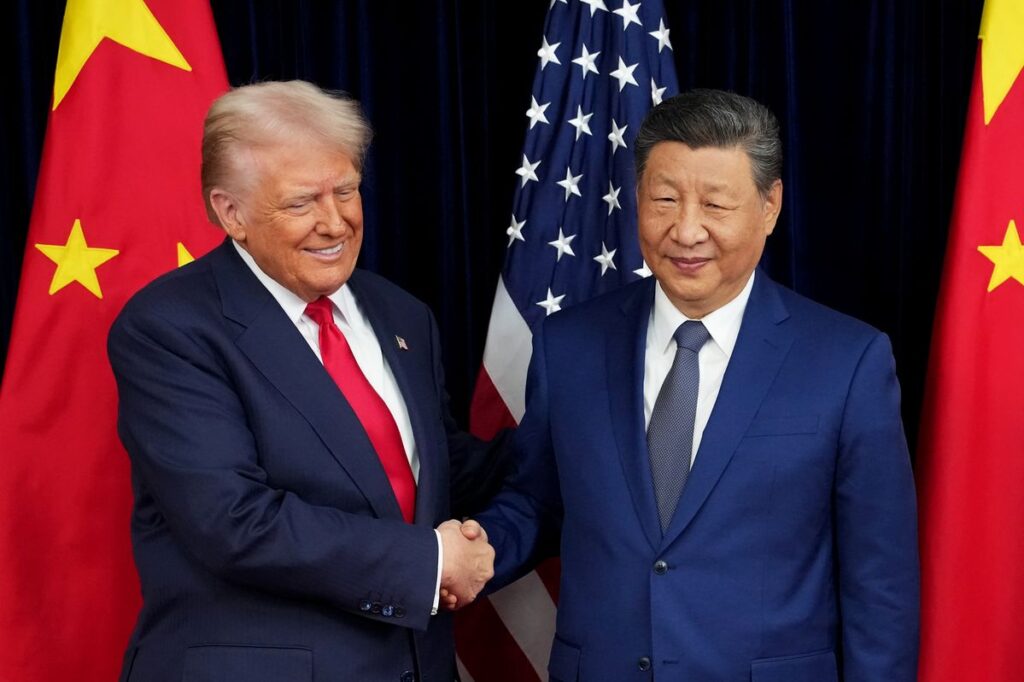
In a development that could reshape global geopolitics, President Donald Trump has confirmed that he has accepted an invitation from Chinese President Xi Jinping to visit Beijing in April, with Xi scheduled to make a state visit to the United States later in the year. The announcement follows what Trump described as a “very good” and highly productive phone call, signaling a surprising thaw in U.S.–China relations after years of escalating tensions.
This diplomatic exchange is not merely ceremonial—it comes at a moment when the world’s two largest economies influence nearly every global issue, from trade and technology to maritime security, narcotics trafficking, and regional conflicts. Trump and Xi’s willingness to engage directly marks a potentially historic shift in the tone and tempo of superpower diplomacy.
A High-Stakes Call With Worldwide Implications
According to official readouts from both sides, the leaders discussed a broad range of urgent topics: global stability, economic cooperation, fentanyl chemical controls, agricultural exports, and strategic security matters including Taiwan. The call builds on a previously announced meeting in South Korea, after which Trump claimed “substantial progress” had been made in solidifying earlier trade agreements.
China’s readout emphasized Xi’s consistent position on Taiwan, framing the island as a core national interest and an issue tied to what Beijing views as the “post-war order.” Trump did not directly challenge this position during the call, though the U.S. continues its long-standing commitment under the Taiwan Relations Act to support Taiwan’s defensive capabilities.
Economic Stakes: Agriculture, Trade, and Market Stability
One of the biggest takeaways from the conversation is the reported advancement of agricultural agreements, particularly surrounding U.S. soybeans—a critical export worth billions annually. American farmers have long relied on China as a dominant buyer, but tariff battles and policy swings in previous years severely disrupted these flows.
Trump’s announcement suggests:
- New or expanded purchasing agreements for American crops
- Potential tariff flexibility on key U.S. exports
- Restored confidence for agricultural markets leading into 2025–2026
If implemented, these steps could stabilize a sector that has faced uncertainty for nearly a decade.
Fentanyl and Chemical Control Cooperation
Another major issue raised was the fentanyl crisis. The United States continues to struggle with synthetic opioid overdoses linked to precursor chemicals originating in China. Trump highlighted new cooperative measures aimed at limiting the export of those chemicals, reinforcing the idea that China’s role is pivotal in reducing the flow of fentanyl into the U.S.
China has previously committed to scheduling certain chemicals used in fentanyl production but enforcement has been inconsistent. Renewed collaboration could signal:
- Tighter monitoring of chemical exporters
- Improved law-enforcement channels between Washington and Beijing
- Potential declines in precursor availability for illicit drug labs in Mexico
Taiwan: The Tense Subtext
Even in moments of improving diplomacy, Taiwan remains the unavoidable pressure point. Xi reportedly reinforced the long-standing Chinese view that Taiwan’s “return” is part of historical and political continuity. Though the U.S. did not change its position, Xi’s comments underscore the delicate nature of the upcoming meetings.
Any diplomatic progress between Trump and Xi will unfold against a backdrop of:
- Chinese military exercises near Taiwan
- Taiwan’s continued democratic autonomy
- Rising U.S. defense commitments in the Indo-Pacific
- Diplomatic signaling from Japan, South Korea, and Australia
While both leaders appear motivated to avoid immediate conflict, the issue remains the most likely flashpoint for future tensions.
Why the Reciprocal Visits Are Unusually Significant
The fact that Trump will visit Beijing first—and Xi will make a high-profile state visit to the U.S. later—signals an effort to restore high-level personal diplomacy between the two men. During Trump’s first term, summits were a cornerstone of his foreign policy strategy, often producing dramatic symbolic moments and the occasional unexpected breakthrough.
These reciprocal visits could influence:
- Global economic markets already responding to hints of improved U.S.–China ties
- Defense posture adjustments across the Indo-Pacific region
- Supply chain resilience strategies for both nations
- A potential reduction in tariff escalation cycles
Face-to-face engagement remains one of the most powerful tools in diplomacy, and both leaders appear to be tapping into that advantage at a pivotal moment.
Challenges & Realities Ahead
Despite the optimistic messaging, several challenges could limit the impact of the renewed relationship:
1. Implementation Barriers
Past trade agreements have stumbled during implementation, with China missing purchase targets and the U.S. maintaining restrictions on tech exports. Execution—not promises—will determine the success of this diplomatic thaw.
2. Domestic Skepticism in Both Countries
In the U.S., skeptics worry about China’s ambitions in advanced technology, espionage, and industrial policy. In China, state media carefully manages narratives to reinforce Xi’s leadership and minimize concessions.
3. Taiwan & Regional Security
Even small missteps could reignite tensions.
4. Global Competition Continues
Areas such as artificial intelligence, semiconductor dominance, and military modernization remain highly competitive.
What This Means for America Going Forward
Trump’s acceptance of Xi’s invitation is a calculated diplomatic move. If managed strategically, it could help the U.S.:
- Reassert influence in global trade
- Reduce the fentanyl crisis through supply-chain clampdowns
- Strengthen American agriculture
- Stabilize relations with the world’s second-largest economy
- Reduce the risk of military escalation in Asia
The success of this diplomatic surge will depend heavily on the outcomes of the Beijing summit in April and Xi’s subsequent state visit to the U.S. later in the year.
For now, the world is watching—because when Washington and Beijing reopen direct channels, global politics shift.
References
- AP News – Trump says he will visit Beijing in April and host Xi later next year
https://apnews.com/article/aab2ec36f55abc9e98d91a5f0d133a92 - Reuters – Trump touts ‘very good’ call with China’s Xi
https://www.reuters.com/world/china/trump-touts-very-good-call-with-chinas-xi-2025-11-24/ - Washington Post – Readout of Trump–Xi call and Taiwan context
https://www.washingtonpost.com/politics/2025/11/24/trump-xi-china-taiwan - Business Today – Details on agricultural and trade progress mentioned by Trump
https://www.businesstoday.com.my/2025/11/25/trump-accepts-xis-april-invitation - Anadolu Agency – U.S.–China cooperation notes regarding fentanyl and enforcement
https://www.aa.com.tr/en/asia-pacific/trump-says-his-phone-call-with-china-s-xi-was-very-good