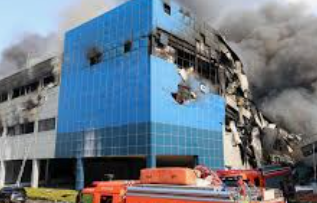
A deadly blaze at an automobile parts factory in Daejeon has once again forced the world to confront a familiar and uncomfortable truth: rapid industrial growth often runs ahead of safety systems designed to protect human life.
On a routine workday, what began as a normal shift quickly spiraled into chaos. Flames engulfed sections of the facility with alarming speed, trapping workers and overwhelming emergency response efforts. By the time the fire was contained, at least 11 lives had been lost, with dozens more injured—many critically. Families across the region are now left grieving, while survivors carry both physical and psychological scars.
A Pattern Beyond Borders
While this tragedy unfolded in South Korea, its implications stretch far beyond national boundaries. Industrial fires are not isolated events; they are recurring warnings. From manufacturing hubs in Asia to processing plants in Europe and the Americas, similar incidents have revealed systemic vulnerabilities—aging infrastructure, inadequate hazard controls, and gaps in emergency preparedness.
In many factories, especially those handling volatile materials, a single spark can escalate into catastrophe. Early indications suggest that combustible substances within the plant may have accelerated the blaze. Whether triggered by equipment failure, human error, or chemical instability, the result underscores a critical issue: safety protocols must evolve as quickly as industrial capabilities.
The Human Cost of Efficiency
Modern production systems are built for speed and scale. But efficiency without resilience can be deadly. Workers—often the least empowered stakeholders in industrial ecosystems—bear the highest risks. When safety drills are infrequent, evacuation routes unclear, or protective systems insufficient, the margin for survival narrows dramatically.
The Daejeon fire highlights the urgent need to prioritize worker safety not as a regulatory checkbox, but as a core operational principle. This includes real-time monitoring systems, stricter compliance enforcement, and a workplace culture that encourages reporting hazards without fear.
Rethinking Industrial Safety
Governments and corporations alike face a pivotal question: how many more incidents will it take to drive meaningful reform?
Strengthening fire suppression systems, improving structural resilience, and ensuring proper storage and handling of hazardous materials are not optional investments—they are necessities. Equally important is transparency in investigations and accountability when standards are breached.
International cooperation can also play a role. Sharing best practices, technologies, and safety frameworks across borders could help prevent similar tragedies elsewhere. Industrial accidents may occur locally, but their lessons are global.
A Moment for Reflection
As investigations continue, the focus must remain on more than just determining the cause. This is a moment to reflect on the broader systems that allowed such a disaster to unfold—and to act decisively to prevent its recurrence.