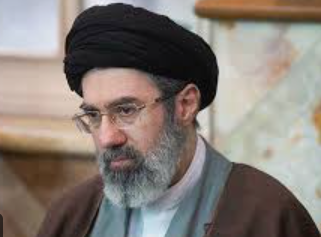
Iran’s powerful clerical establishment has named Mojtaba Khamenei as the country’s new Supreme Leader, following the death of his father, Ali Khamenei, marking a historic and controversial leadership transition in the Islamic Republic.
The decision was made by the Assembly of Experts, the influential clerical body responsible for appointing and supervising Iran’s Supreme Leader. The council convened in an emergency session after the death of Ali Khamenei and voted to elevate his son to the highest political and religious position in the country.
Mojtaba Khamenei, a mid-ranking cleric long believed to wield significant influence behind the scenes in Tehran, has for years been viewed by analysts as a potential successor to his father. Despite never holding a major formal government office, he has maintained strong relationships within Iran’s conservative political establishment and the powerful Islamic Revolutionary Guard Corps.
Ali Khamenei, who led Iran for more than three decades after succeeding Ruhollah Khomeini in 1989, was the longest-serving leader of the Islamic Republic. His tenure shaped Iran’s domestic and foreign policy, particularly its confrontational stance toward the United States and Israel.
The appointment of Mojtaba Khamenei is expected to spark debate both inside and outside Iran. Critics argue the move resembles hereditary succession and contradicts the ideological foundations of the Iranian Revolution of 1979, which overthrew the monarchy and established a theocratic republic.
Supporters within Iran’s conservative establishment, however, say Mojtaba Khamenei possesses deep knowledge of the country’s political system and the loyalty of key institutions, positioning him to maintain stability during a period of heightened regional tensions.
International reaction to the announcement has been swift, with governments and analysts closely watching how the leadership change could affect Iran’s role in the Middle East, its nuclear policy, and its relationship with Western powers.
As the new Supreme Leader, Mojtaba Khamenei now holds ultimate authority over Iran’s military, judiciary, state media, and key political decisions—making him one of the most powerful figures in the region. Observers say his leadership will likely shape the direction of the Islamic Republic for years to come.