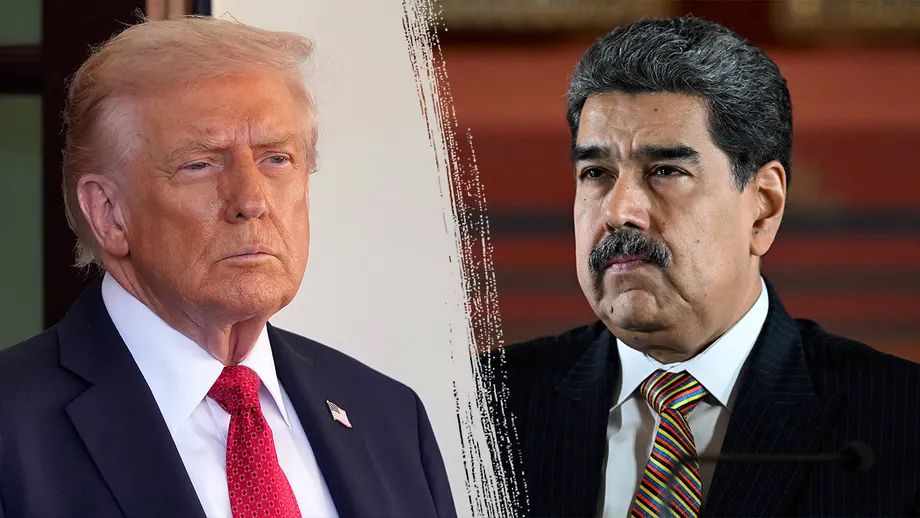
Venezuelan President Nicolás Maduro has indicated that Caracas is open to renewed dialogue with the United States on combating drug trafficking, marking a potentially significant—if cautious—shift in tone between two governments long locked in mutual hostility. Yet even as he floated cooperation on narcotics enforcement, Maduro conspicuously avoided addressing reports and speculation surrounding an alleged Central Intelligence Agency (CIA) operation targeting Venezuelan interests, a silence that has fueled debate at home and abroad.
The juxtaposition of outreach and omission underscores the complexity of U.S.–Venezuela relations: pragmatic engagement on shared security concerns unfolding alongside deep mistrust, unresolved accusations, and a history of covert intrigue.
A Calculated Opening on Narcotics Cooperation
Speaking during a nationally broadcast address, Maduro said Venezuela was prepared to “talk with the United States as equals” about confronting drug trafficking networks operating across the Caribbean basin and northern South America. He framed the issue as a transnational threat that cannot be managed by unilateral action, insisting that cooperation—rather than sanctions and isolation—offers the only sustainable path to reducing the flow of illicit drugs.
Maduro emphasized that Venezuela, which shares porous borders with Colombia and has long served as a transit corridor for cocaine shipments destined for North America and Europe, has an interest in dismantling trafficking routes that undermine regional security. He highlighted recent seizures and arrests by Venezuelan security forces as evidence of what he described as a “serious and sovereign” anti-narcotics effort.
While the United States has historically accused senior Venezuelan officials of complicity in drug trafficking—claims Caracas vehemently denies—Maduro’s remarks suggest an attempt to reframe the conversation. By focusing on shared interests and technical cooperation, his government appears to be signaling a willingness to compartmentalize disputes in pursuit of limited, issue-specific engagement.
Washington’s Longstanding Accusations and Skepticism
The U.S. government has for years maintained that Venezuela plays a significant role in regional narcotics trafficking, an assertion backed by indictments, sanctions, and public statements by successive administrations. American officials have accused elements within the Venezuelan state of facilitating or protecting drug routes, particularly during periods of political turmoil and weakened institutional oversight.
Caracas rejects these claims, arguing that Washington uses drug trafficking allegations as a political weapon to justify sanctions and undermine the legitimacy of the Maduro government. Venezuelan officials frequently counter that U.S. demand for narcotics, not Venezuelan governance, is the primary driver of the trade.
Against this backdrop, Maduro’s overture raises questions in Washington about intent and credibility. U.S. policymakers are likely to weigh the potential benefits of cooperation—such as intelligence sharing or coordinated interdictions—against concerns that engagement could legitimize a government they have long sought to isolate.
Silence on the Alleged CIA Strike
Notably absent from Maduro’s remarks was any reference to reports circulating in regional media and online platforms alleging a recent CIA-linked operation targeting Venezuelan assets or personnel. The nature of the alleged strike remains unclear, with details varying widely and no official confirmation from U.S. authorities.
Maduro’s silence is striking given his history of publicly accusing the United States of orchestrating coups, sabotage, and assassination plots against his government. In past instances, he has been quick to denounce what he describes as imperial aggression, often naming U.S. intelligence agencies directly.
Analysts suggest several possible reasons for the omission. One is strategic restraint: raising allegations of covert action while simultaneously signaling openness to talks could undermine the credibility of the outreach. Another is evidentiary caution; without definitive proof, public accusations could backfire diplomatically or domestically.
There is also the possibility that the silence is deliberate messaging—an attempt to keep the focus on cooperation rather than confrontation, at least for now.
Domestic and Regional Calculations
Maduro’s statement must also be understood in the context of Venezuela’s internal challenges. The country continues to grapple with economic hardship, inflationary pressures, and the lingering effects of international sanctions. Limited engagement with Washington, even on a narrow issue like drug trafficking, could create openings for broader negotiations that ease economic constraints.
Regionally, Venezuela has sought to reposition itself as a responsible actor following years of isolation. Improved relations with neighboring countries and renewed participation in regional forums have been part of this effort. Cooperation on drug trafficking—a priority shared by many Latin American governments—fits neatly into that strategy.
However, critics within Venezuela argue that any talks with the United States risk conceding leverage without guarantees of sanctions relief or political recognition. Opposition figures remain wary that security cooperation could strengthen state institutions without addressing concerns over governance and human rights.
The U.S. Strategic Lens
From Washington’s perspective, drug trafficking remains a persistent national security concern, and pragmatic engagement has precedent. The United States has, at various times, cooperated with governments it strongly criticizes on other fronts when interests align.
Yet the shadow of alleged intelligence operations complicates matters. If the reports of a CIA-linked strike reflect ongoing covert pressure, they suggest that engagement and coercion may be proceeding in parallel—a dual-track approach designed to extract concessions while maintaining leverage.
U.S. officials have neither confirmed nor denied the allegations, adhering to the longstanding policy of silence regarding intelligence activities. This ambiguity, while standard practice, contributes to speculation and mistrust in Caracas.
A History of Mutual Suspicion
U.S.–Venezuela relations have been defined by cycles of confrontation and tentative rapprochement for more than two decades. Diplomatic ties have been severed and partially restored, sanctions imposed and selectively eased, accusations traded and occasionally muted.
Drug trafficking has featured prominently in this history, often serving as both a point of contention and a potential avenue for engagement. Past attempts at cooperation have faltered amid political disputes, legal actions, and shifting regional dynamics.
Maduro’s latest remarks revive the question of whether limited cooperation can succeed where broader diplomatic efforts have failed. Much will depend on whether both sides can establish trust mechanisms, even at a technical level, without allowing deeper disagreements to derail the process.
What Comes Next
For now, Maduro’s openness remains rhetorical. No formal talks have been announced, and Washington has not publicly responded with enthusiasm or rejection. Any movement toward dialogue is likely to be cautious, incremental, and closely scrutinized by domestic constituencies on both sides.
The silence over the alleged CIA strike adds an element of uncertainty. If further information emerges or if Caracas chooses to address the issue directly, the tone of engagement could shift quickly. Conversely, continued restraint may signal a deliberate attempt to keep diplomatic doors ajar.
Ultimately, the episode illustrates the paradox at the heart of U.S.–Venezuela relations: cooperation and confrontation coexisting uneasily, shaped by shared threats and profound distrust. Maduro’s willingness to talk about drug trafficking suggests an awareness that isolation has limits. His decision to remain silent on intelligence allegations suggests an equally clear understanding that words, as much as actions, can shape the trajectory of diplomacy.
Whether this moment evolves into meaningful engagement or dissolves into another chapter of recrimination will depend not only on public statements, but on the quieter calculations taking place behind closed doors in Caracas and Washington alike.