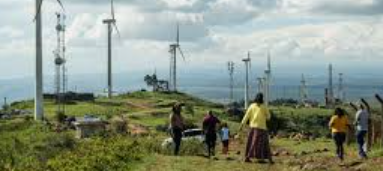
Nairobi is increasingly positioning itself at the center of Africa’s green energy transformation, leveraging policy reform, private investment, and innovation to accelerate the continent’s shift toward renewable power.
Kenya’s capital has become a hub for clean-energy initiatives spanning geothermal, solar, wind, and green finance, reflecting the country’s broader ambition to anchor economic growth in sustainable energy. With more than 90 percent of Kenya’s electricity already generated from renewable sources, Nairobi now serves as both a policy engine and a coordination center for regional energy projects.
At the heart of this push is Kenya’s geothermal sector, much of it managed through institutions headquartered in Nairobi. The country sits atop the East African Rift System, one of the world’s most promising geothermal zones. Investments in this resource have allowed Kenya not only to stabilize domestic power supply but also to reduce dependence on fossil fuel imports.
Beyond geothermal power, Nairobi has attracted a growing ecosystem of startups and international firms focused on solar mini-grids, battery storage, electric mobility, and smart energy management. These technologies are increasingly deployed in rural and peri-urban areas, extending electricity access while avoiding carbon-intensive infrastructure.
Government policy has played a key role. Regulatory frameworks supporting independent power producers, combined with incentives for renewable investment, have helped Nairobi attract development banks, climate funds, and private capital. Several pan-African energy financing platforms now operate from the city, channeling funds into clean-energy projects across East and Central Africa.
Nairobi’s green leadership also extends into transportation and urban planning. Pilot projects for electric buses, clean cooking solutions, and energy-efficient buildings are being tested in the city as part of broader efforts to reduce emissions and improve air quality.
Regional analysts say Nairobi’s influence lies not only in generation capacity but in institutional leadership. From hosting international climate conferences to shaping regional power-pooling discussions, the city has become a focal point for aligning Africa’s development goals with climate commitments.
Challenges remain, including grid expansion costs, affordability concerns, and the need to scale storage technologies. However, Nairobi’s progress demonstrates how African cities can leapfrog traditional energy pathways and build systems tailored to local realities.
As climate pressures intensify and energy demand rises across the continent, Nairobi’s approach is increasingly viewed as a model—showing that Africa’s green transition can be driven from within, powered by innovation, policy clarity, and regional cooperation.