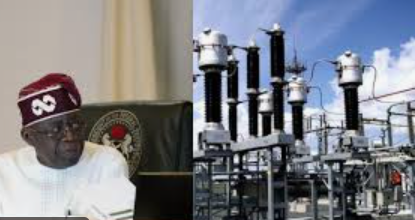
Nigeria is taking a decisive step to confront one of its most persistent economic bottlenecks, as President Bola Ahmed Tinubu has approved a sweeping ₦3.3 trillion plan aimed at settling accumulated debts within the country’s power sector.
The initiative is designed to resolve years of financial strain that have weakened the electricity value chain—from gas suppliers to generation companies—ultimately affecting power delivery to millions of Nigerians. By addressing these liabilities, the government is seeking to restore stability to a sector widely regarded as critical to national development.
Breaking the Cycle of Debt
For over a decade, Nigeria’s electricity industry has struggled under the weight of unpaid obligations. Power generation companies have often operated below capacity due to irregular payments, while gas suppliers—the backbone of thermal power generation—have faced mounting arrears.
This cycle of debt has contributed to inconsistent electricity supply, forcing businesses and households to depend heavily on private generators. The economic cost has been significant, reducing productivity and increasing the cost of living.
The newly approved plan represents an attempt to break that cycle by injecting liquidity and rebuilding trust among stakeholders.
Restoring Confidence in the Energy Market
Beyond immediate financial relief, the policy is expected to send a strong signal to investors. Nigeria’s power sector, despite its vast potential, has struggled to attract sustained investment due to concerns about payment security and regulatory uncertainty.
Clearing verified debts could improve confidence among both local and international investors, potentially unlocking new capital for infrastructure upgrades, grid expansion, and renewable energy projects.
Industry observers note that a financially stable power sector is essential for broader economic transformation, particularly in manufacturing, technology, and services.
Implications for Businesses and Households
Reliable electricity remains one of the most critical needs for Nigeria’s growing population and economy. Persistent outages have forced companies to allocate a large portion of their budgets to self-generation, while households bear the burden of rising fuel costs.
If effectively implemented, the debt settlement plan could lead to more consistent power supply, reducing reliance on generators and easing operational pressures across sectors. This, in turn, may help curb inflationary trends linked to energy costs.
The Reform Challenge Ahead
While the scale of the intervention is significant, experts caution that financial settlement alone will not resolve all underlying issues. Structural challenges—including tariff imbalances, transmission limitations, and inefficiencies in electricity distribution—remain deeply rooted.
Sustainable progress will likely depend on continued reforms that ensure cost-reflective pricing, improved metering systems, and stronger regulatory oversight.
A Defining Moment for Nigeria’s Energy Future
The ₦3.3 trillion plan marks a critical moment in Nigeria’s ongoing effort to reform its power sector. It reflects a recognition at the highest level of government that reliable electricity is not just an infrastructure issue, but a cornerstone of economic growth and national competitiveness.
As implementation unfolds, the focus will shift to measurable outcomes—whether power generation improves, supply stabilizes, and Nigerians begin to experience meaningful change in their daily lives.
For a country with vast energy potential, the success of this initiative could signal the beginning of a long-awaited transformation.