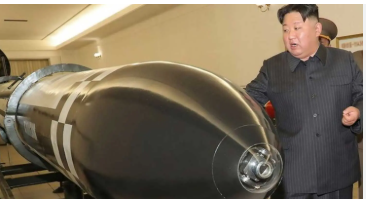
North Korea has launched multiple missiles into surrounding waters in a show of force that came just moments after news broke of the capture of Venezuelan leader Nicolás Maduro, a timing that has intensified international concern over rising global instability.
According to regional security officials, the missiles were fired from North Korea’s eastern coastline and landed in the sea without immediately reported damage. While Pyongyang has not issued an official explanation, the launch occurred amid rapidly unfolding geopolitical developments, prompting analysts to examine possible strategic messaging behind the move.
The missile test followed closely on the announcement by the United States that Maduro had been captured and transferred to U.S. custody after a dramatic operation that ended his rule. The near-simultaneous timing has drawn attention from diplomatic and defense circles worldwide.
Strategic Signaling Amid Global Shock
North Korea is known to use missile launches as a means of signaling defiance, deterrence, or protest during moments of heightened international tension. Analysts suggest the timing may reflect Pyongyang’s desire to assert relevance and independence at a moment when global focus has shifted sharply toward developments in the Western Hemisphere.
Though there is no confirmed coordination between events, the launch has been interpreted by some observers as a reminder that crises in one region can quickly ripple across others, testing the international system’s capacity to manage multiple flashpoints at once.
South Korea and Japan confirmed they were monitoring the situation closely, while defense agencies reviewed radar and tracking data to assess the missiles’ range and capabilities.
U.S. and Regional Responses
U.S. officials acknowledged the launch but urged calm, noting that North Korea has conducted similar tests in the past during periods of diplomatic strain. Defense sources emphasized that there was no immediate threat to U.S. territory or allies, though readiness levels remain elevated.
In Seoul, officials convened emergency security consultations, reaffirming their commitment to joint defense arrangements with Washington. Japan also issued advisories to maritime operators in nearby waters, a routine precaution following missile activity.
A Broader Pattern of Tension
The launch adds to a growing sense that the international environment is entering a more volatile phase, with multiple actors testing boundaries and projecting power. From Eastern Europe to the Middle East, and now from Latin America to the Korean Peninsula, governments are navigating overlapping crises with global implications.
Security experts warn that such moments demand careful coordination among major powers to prevent miscalculation. “When global attention is fragmented, smaller provocations can escalate faster than expected,” one regional analyst noted.
Questions Without Immediate Answers
North Korea has yet to release details about the missile launch, leaving open questions about its intent and technical purpose. Past launches have ranged from weapons testing to symbolic demonstrations timed around international events.
Whether the timing was coincidental or deliberate remains unclear. What is evident, however, is that the launch has added another layer of complexity to an already unsettled global landscape.
As governments digest the implications of Maduro’s capture and monitor developments on the Korean Peninsula, diplomatic channels are likely to remain active behind the scenes in an effort to contain tensions and avoid escalation.
For now, the world watches as events in distant regions converge, underscoring how quickly geopolitical shocks can resonate far beyond their point of origin.