South Asia was thrust into a dangerous new phase of instability after Pakistan announced that it had entered what officials described as an “open war” with Afghanistan, following escalating military clashes
along their volatile border. The declaration marks one of the most serious confrontations between the two neighboring countries in modern history, transforming years of tension, accusations, and sporadic violence into direct state-to-state conflict with potentially far-reaching regional consequences.
The crisis unfolded after a rapid escalation of hostilities along the frontier separating Pakistan from Afghanistan, a boundary long plagued by disputes, militant activity, and mutual distrust. Pakistani authorities said military operations were launched in response to persistent cross-border attacks carried out by armed groups allegedly operating from Afghan territory. According to Islamabad, repeated warnings had failed to produce action, leaving military force as what officials called a “necessary defensive response.”
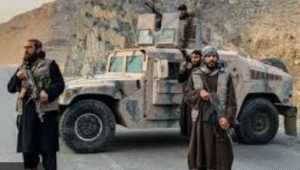
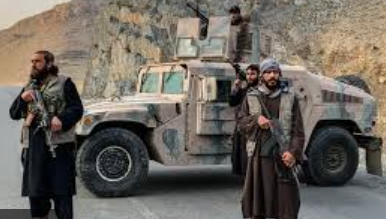
Airstrikes carried out by Pakistani forces reportedly targeted multiple locations inside Afghanistan, including areas believed to host militant networks accused of launching attacks against Pakistani security forces. Explosions were reported in major Afghan cities, triggering panic among civilians and prompting immediate condemnation from Afghan authorities. The Taliban-led government in Kabul accused Pakistan of violating national sovereignty and responded with retaliatory military action along border positions, confirming that the confrontation had escalated beyond limited skirmishes.
For years, Pakistan has accused Afghan-based militants, particularly factions linked to insurgent movements opposing Islamabad, of using Afghan territory as a safe haven. Afghan officials have consistently rejected these claims, arguing that Pakistan’s internal security challenges should not be externalized. The dispute has fueled a cycle of blame that intensified after the Taliban regained control of Afghanistan, reshaping regional security dynamics and weakening already fragile cooperation mechanisms between the two countries.
The declaration of “open war” signals a dramatic shift from covert tensions to overt military confrontation. Unlike previous incidents that were contained through diplomatic channels, the current crisis involves sustained military exchanges, airpower deployment, and public rhetoric suggesting both sides are prepared for prolonged confrontation. Analysts warn that once nations adopt war language officially, political pressure often makes de-escalation more difficult without external mediation.
The humanitarian implications are already becoming a concern. Communities living along the mountainous border region are among the most vulnerable populations in the region, many already facing poverty, displacement, and limited access to infrastructure. Renewed fighting threatens to trigger new waves of refugees, disrupt trade crossings, and deepen economic hardship in areas heavily dependent on cross-border movement.
Regional stability hangs in the balance partly because Pakistan occupies a uniquely sensitive strategic position as a nuclear-armed state. While the conflict currently appears limited to conventional military operations, any sustained escalation raises alarm internationally due to the broader security risks associated with instability involving nuclear powers. Neighboring countries and global actors have begun urging restraint, emphasizing the need for dialogue to prevent the situation from spiraling into a wider regional crisis.
The conflict also highlights the unresolved legacy of the Durand Line, the colonial-era border dividing Pakistan and Afghanistan. Afghanistan has historically disputed the legitimacy of the boundary, while Pakistan considers it an internationally recognized frontier. This disagreement has contributed to decades of mistrust, allowing militant movements and tribal networks to operate across porous regions where state authority remains uneven.
Economic consequences may emerge quickly if tensions persist. Trade routes connecting Central Asia to South Asian markets could face disruption, while investor confidence across the region may weaken amid fears of instability. Pakistan and Afghanistan both face economic challenges domestically, making prolonged conflict particularly costly for governments already managing inflation, unemployment, and humanitarian pressures.
Security analysts suggest that the confrontation reflects deeper structural problems rather than a sudden breakdown in relations. The collapse of coordinated counterterrorism mechanisms, shifting alliances after international troop withdrawals from Afghanistan, and competing security priorities have created an environment where misunderstandings and retaliatory actions escalate rapidly. Without strong diplomatic engagement, cycles of attack and retaliation risk becoming normalized.
International mediation may become essential in preventing further escalation. Historically, crises between the two countries have cooled through behind-the-scenes negotiations involving regional stakeholders and global powers. Whether similar diplomatic efforts can succeed now remains uncertain, especially as domestic political pressures push leaders toward firm military postures.
The unfolding situation underscores how fragile regional peace remains in parts of the world shaped by long-standing conflicts and unresolved political grievances. What began as border tensions has now evolved into open confrontation between neighboring states whose histories, cultures, and economies remain deeply interconnected despite political divisions.
As military activity continues and diplomatic efforts struggle to catch up with events on the ground, the coming days will likely determine whether the conflict settles into controlled tension or expands into a prolonged war with consequences extending far beyond South Asia. For the international community, the crisis serves as a stark reminder that unresolved disputes can rapidly ignite, reshaping regional security landscapes almost overnight and placing millions of lives at risk in the process.