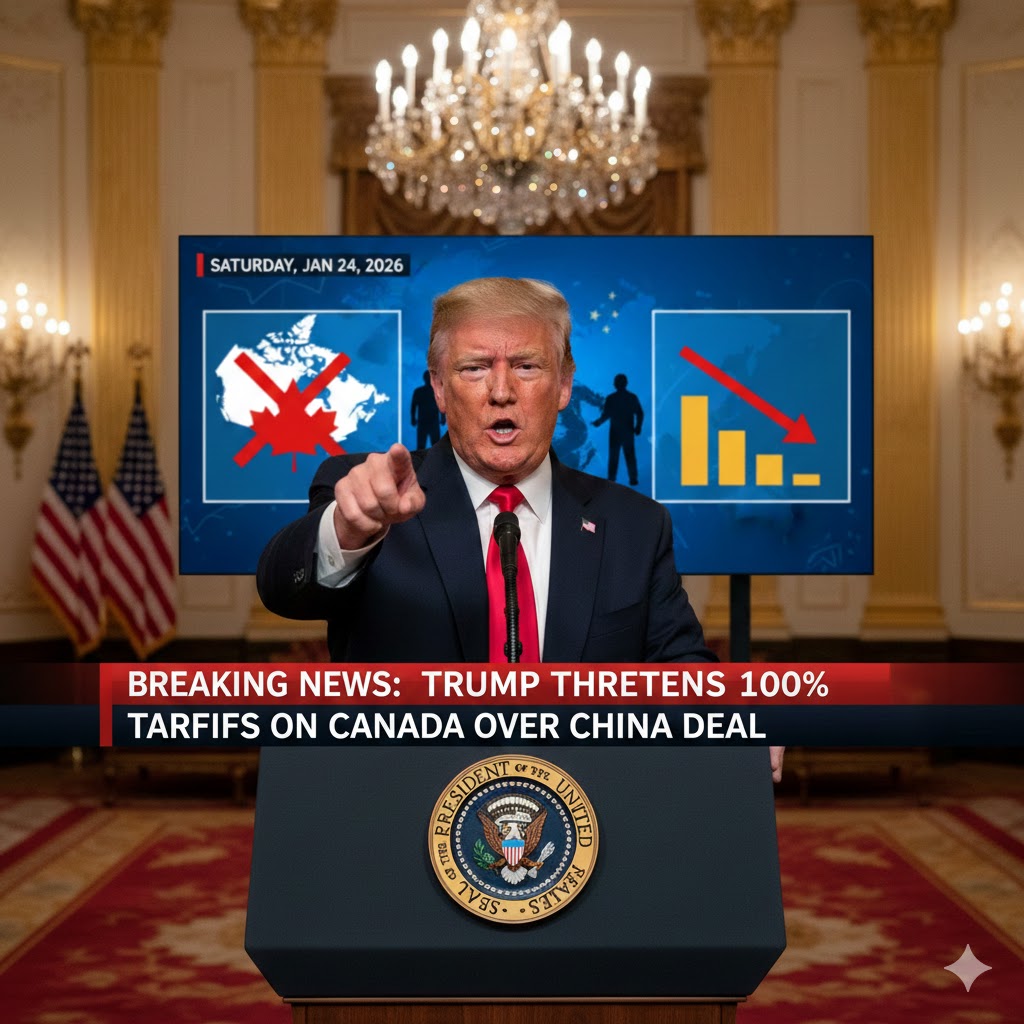
President Donald Trump announced that if Canada moves forward with a trade deal with China, the United States would impose a 100% tariff on Canadian goods. This would double the cost of Canadian imports entering the U.S., a dramatic measure given the close economic integration between the two countries.
Trump criticized Canadian Prime Minister Mark Carney, saying Carney is “sorely mistaken” if he believes Canada can act as a simple entry point for Chinese products into the U.S. He framed the potential trade deal as a serious threat to Canada’s economy and society, suggesting China could gain a major advantage over Canada.
Background Context
- Canada–China trade: Canada has been negotiating a preliminary trade arrangement with China to reduce tariffs on certain products, including electric vehicles. This is part of a strategy to diversify trade while keeping strong ties with the U.S.
- U.S.–Canada relations: Trump’s warning marks a sharp escalation from earlier statements, when he had been relatively neutral or supportive of Canada’s efforts to engage with China.
- Political tension: The dispute has roots in past disagreements, including Carney’s public comments on international economic policies, which Trump interpreted as criticism of his administration.
Potential Impact
If a 100% tariff is implemented, the consequences could be significant:
- Affected industries: Automotive, machinery, energy, and metals could face sharp cost increases.
- Economic ripple effects: The tariff could disrupt supply chains, raise consumer prices, and possibly trigger retaliatory measures.
- Diplomatic consequences: U.S.–Canada relations could worsen, forcing Canada to balance its economic ties between China and the U.S.
Current Status
- The tariff remains a threat, not yet enacted.
- Canada maintains that it is negotiating carefully and does not intend to damage its economic relationship with the United States.