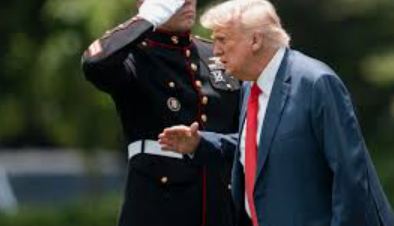
In a move that could redefine the trajectory of Middle East tensions, President Donald Trump is reportedly considering a highly sensitive operation aimed at securing Iran’s stockpile of enriched uranium. The
proposal, still under internal review, reflects growing concern within Washington over the pace and scale of Tehran’s nuclear capabilities.
According to emerging details, the concept under discussion goes beyond traditional military strategy. Rather than relying solely on airstrikes or sanctions, the plan would involve physically locating, securing, and removing enriched uranium from within Iran. Such an operation, if approved, would represent one of the most complex and high-risk missions in modern military history.
At its core, the strategy is driven by a singular objective: preventing Iran from advancing toward nuclear weapons capability. While previous efforts have focused on deterrence and diplomatic pressure, this approach signals a shift toward direct intervention. Supporters argue that removing the material itself could offer a more definitive solution than attempting to destroy facilities, which may be deeply buried or quickly rebuilt.
However, the challenges associated with such an operation are immense. Iran’s nuclear infrastructure is believed to be spread across multiple locations, many of them fortified and protected by advanced defense systems. Any attempt to access these sites would likely require coordinated ground and air operations, along with specialized teams capable of handling sensitive nuclear materials under potentially hostile conditions.
Beyond the technical hurdles, the geopolitical risks are equally significant. A direct operation inside Iran could trigger swift retaliation, not only from Tehran but also from allied groups across the region. Military analysts warn that such a move could rapidly escalate into a broader conflict, drawing in multiple actors and destabilizing an already fragile regional balance.
The timing of the discussions is also notable. The Middle East is currently experiencing heightened volatility, with overlapping crises contributing to a climate of uncertainty. Energy markets, in particular, remain highly sensitive to any disruption in the region, where key shipping routes and production hubs play a critical role in global supply. Any escalation involving Iran could have immediate economic repercussions worldwide.
Despite the seriousness of the proposal, officials emphasize that no final decision has been made. Diplomatic channels, though strained, remain active, and there are ongoing efforts to explore negotiated outcomes. President Trump himself has signaled that while all options are on the table, a peaceful resolution is still preferable if it can effectively address security concerns.
Critics of the potential operation caution that the long-term consequences may outweigh the immediate strategic gains. They argue that even if successful, the removal of enriched uranium would not eliminate the underlying knowledge and infrastructure that enable nuclear development. In this view, the move could provide only a temporary solution while increasing the likelihood of sustained conflict.
Others point to the legal and ethical dimensions of such an action. Conducting a mission of this nature within a sovereign nation raises complex questions under international law, particularly in the absence of broad international consensus. The precedent it could set is also a matter of concern, as it may influence how similar situations are handled in the future.
At the same time, proponents maintain that the risks of inaction are equally serious. They argue that allowing Iran’s nuclear program to advance unchecked could lead to a far more dangerous scenario, including the possibility of nuclear proliferation across the region. From this perspective, decisive action—however risky—may be necessary to prevent a larger crisis.
The debate within policy circles reflects a broader tension between immediate security concerns and long-term stability. It also underscores the evolving nature of modern conflict, where technological, political, and strategic factors intersect in increasingly complex ways.
International reactions have been cautious but closely attentive. Allies and adversaries alike are monitoring the situation, aware that any shift in U.S. strategy toward Iran could have wide-ranging implications. Calls for restraint and renewed diplomacy are likely to intensify as more details emerge.
For now, the proposal remains a consideration rather than a commitment. Yet even at this stage, it highlights the seriousness with which the issue of Iran’s nuclear program is being viewed. The mere possibility of such an operation signals a willingness to explore options that were once considered extraordinary.
As deliberations continue, the stakes remain exceptionally high. The decision facing Donald Trump is not simply about one operation, but about the broader direction of U.S. policy and its impact on global security.
In an increasingly uncertain world, where the margin for error is often narrow, the path chosen in this moment could shape the geopolitical landscape for years to come.