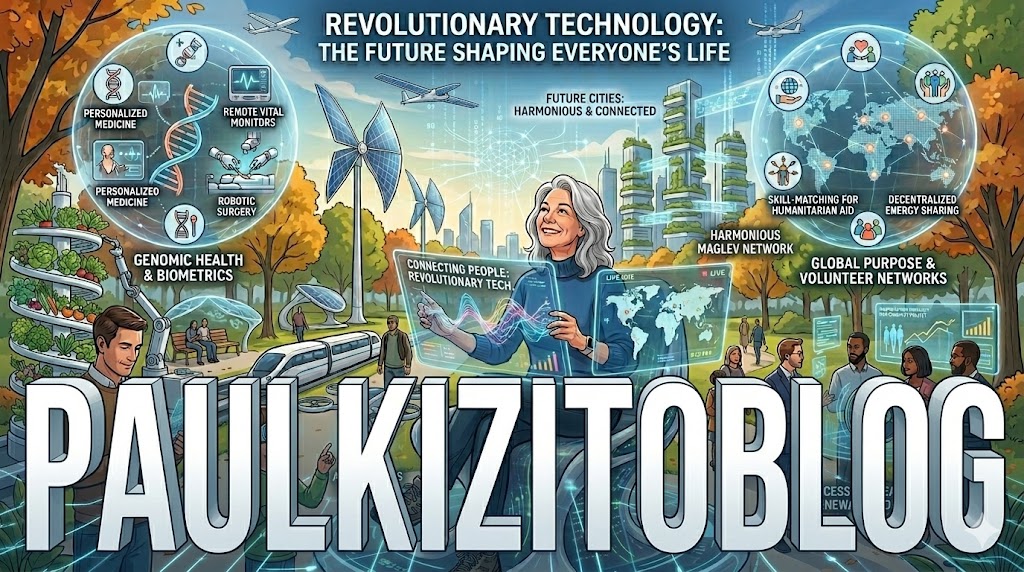
Technology has always influenced human progress, but the pace and scale of innovation in the twenty-first century have transformed it into a force that touches nearly every aspect of daily living. Revolutionary
technology is no longer confined to laboratories or large corporations; it shapes how people communicate, work, learn, receive healthcare, manage finances, and even understand themselves. The future being built today is not distant or abstract—it is already unfolding, redefining opportunities and challenges for individuals and societies across the world.
One of the most powerful drivers of this transformation is artificial intelligence. Machines are increasingly capable of analysing data, recognising patterns, and assisting in decision-making processes that once required human expertise alone. AI systems now support medical diagnoses, financial forecasting, customer service, education platforms, and creative industries. Rather than replacing human intelligence entirely, these systems are reshaping the nature of work by automating repetitive tasks and enabling people to focus on problem-solving, creativity, and strategic thinking. For individuals, this means adapting to continuous learning as technology evolves alongside professional skills.
Automation and robotics represent another revolutionary shift. From manufacturing plants to agricultural fields, intelligent machines are improving efficiency and productivity. In agriculture, smart sensors monitor soil conditions and optimise irrigation, helping farmers increase yields while conserving resources. In logistics, automated warehouses and delivery technologies are transforming supply chains, allowing goods to move faster and more accurately across continents. These advancements promise economic growth but also raise important questions about employment transitions and workforce retraining. Societies must balance innovation with inclusive opportunities so technological progress benefits everyone rather than a limited few.
Healthcare technology stands among the most life-changing innovations. Wearable devices can monitor heart rates, sleep patterns, and physical activity in real time, empowering individuals to take preventive approaches to health. Telemedicine allows patients to consult doctors remotely, reducing barriers created by distance or limited infrastructure. Advances in biotechnology and personalised medicine are enabling treatments tailored to individual genetic profiles, increasing effectiveness while reducing side effects. In many regions, technology is bridging healthcare gaps by connecting rural populations with specialised medical expertise previously unavailable to them.
Communication technology has perhaps produced the most visible social transformation. Smartphones and high-speed internet have connected billions of people, turning the world into a digitally interconnected community. Information travels instantly across borders, enabling collaboration, activism, education, and cultural exchange. Social platforms allow individuals to share ideas and build communities regardless of geography. However, this connectivity also introduces challenges such as misinformation, digital addiction, and privacy concerns. The future of communication technology will depend not only on innovation but also on ethical frameworks that promote responsible use.
Education is undergoing a profound technological revolution as well. Online learning platforms, virtual classrooms, and interactive digital tools are expanding access to knowledge beyond traditional institutions. Students can learn coding, business skills, languages, or scientific concepts from anywhere with an internet connection. Artificial intelligence is beginning to personalise education by adapting lessons to individual learning speeds and styles. This shift has the potential to reduce educational inequality, especially in developing regions, though it also highlights the importance of closing the digital divide so access to technology becomes universal.
Financial technology, often called fintech, is reshaping how people manage money. Mobile banking, digital wallets, and blockchain systems allow faster and more secure transactions. In regions where traditional banking services were once limited, mobile payment systems have enabled millions of people to participate in the formal economy for the first time. Entrepreneurs can access digital marketplaces, freelancers can receive international payments, and small businesses can operate globally from local communities. The future financial landscape will likely become increasingly decentralised, transparent, and accessible.
Another revolutionary area is renewable energy technology. Innovations in solar, wind, and energy storage systems are changing how societies generate and consume power. As climate concerns grow, technology is enabling cleaner alternatives that reduce dependence on fossil fuels. Smart grids and energy-efficient infrastructure help optimise electricity use, lowering environmental impact while improving sustainability. The transition to renewable energy not only addresses environmental challenges but also creates new industries and employment opportunities worldwide.
Transportation is also entering a new era. Electric vehicles are becoming more common, reducing emissions and operating costs compared to traditional fuel-powered cars. Autonomous driving technology continues to advance, promising safer roads and improved mobility for elderly and disabled individuals. High-speed rail systems and smart traffic management solutions aim to reduce congestion in rapidly growing cities. These innovations illustrate how technology can reshape urban planning and everyday mobility.
The concept of smart living environments further demonstrates how technology is blending seamlessly into daily life. Smart homes equipped with connected devices allow residents to control lighting, security, temperature, and appliances remotely. Cities are adopting intelligent infrastructure that monitors traffic flow, waste management, and energy consumption to improve efficiency. These developments aim to create environments that respond dynamically to human needs, enhancing convenience while conserving resources.
Despite its benefits, revolutionary technology introduces complex ethical and social considerations. Privacy has become a major concern as personal data fuels many digital services. Questions about data ownership, surveillance, and cybersecurity require careful regulation and public awareness. Additionally, the rapid pace of innovation risks widening inequality between those who have access to technology and those who do not. Ensuring inclusive access remains one of the most important challenges of the technological future.
Human identity and relationships are also evolving in response to technological change. Remote work, virtual collaboration, and digital communities are redefining traditional ideas of workplace and social interaction. While technology enables flexibility and global connection, maintaining authentic human relationships and emotional wellbeing becomes increasingly important. Balancing digital engagement with real-world experiences will shape how societies adapt psychologically to technological progress.
Creativity itself is being transformed. Digital tools allow individuals to produce music, films, designs, and written content with unprecedented ease. Artificial intelligence can assist creative processes, generating ideas or enhancing production quality. Rather than diminishing human creativity, these tools expand possibilities, allowing more people to participate in artistic expression and innovation.
Looking ahead, emerging technologies such as quantum computing, advanced biotechnology, augmented reality, and space exploration may redefine the boundaries of human capability. Quantum computing could solve complex scientific problems beyond the reach of traditional computers. Augmented and virtual reality may transform education, entertainment, and professional training by creating immersive experiences. Space technology continues to open possibilities for satellite communication, climate monitoring, and even future habitation beyond Earth.
The future shaped by revolutionary technology ultimately depends on human choices. Innovation itself is neutral; its impact reflects how societies design, regulate, and use technological tools. Education, ethical leadership, and global cooperation will play crucial roles in ensuring that technology serves humanity rather than controls it. Individuals must cultivate adaptability, critical thinking, and digital literacy to thrive in an environment defined by constant change.
Revolutionary technology is not simply about machines or software—it is about transformation. It changes how people live, think, and interact with the world. For younger generations, technology will define career paths that do not yet exist. For older generations, it offers opportunities to remain connected, informed, and empowered. Across cultures and continents, technology is becoming a shared language of progress.
The future of everyone is increasingly intertwined with innovation. As technology continues to evolve, humanity stands at a crossroads where possibility and responsibility meet. Embracing progress while preserving human values will determine whether this technological revolution leads to deeper inequality or greater collective prosperity. If guided wisely, revolutionary technology has the potential to improve quality of life, expand human potential, and create a future defined not only by advancement but by inclusion, sustainability, and shared progress.