The war between Russia and Ukraine entered a sharper and more complex phase as Moscow accused Kyiv of launching coordinated drone and missile attacks targeting the Russian capital, while Ukrainian officials simultaneously acknowledged responsibility for precision strikes on Russian industrial and military-linked facilities deep inside Russian territory. The competing narratives reflect not only the fog of war but also the expanding geographic and strategic scope of a conflict now well beyond its third year.
Russian authorities described the alleged attacks on Moscow as a serious escalation, framing them as an attempt to strike at the symbolic and political heart of the Russian state. Ukraine, for its part, characterised its own actions as legitimate defensive operations aimed at degrading Russia’s capacity to sustain its military campaign.
Claims of Attacks on Moscow
According to Russia’s Ministry of Defence, air defence systems intercepted multiple unmanned aerial vehicles and missile threats approaching Moscow and surrounding regions. Russian officials stated that several drones were destroyed in mid-air, while others were neutralised before reaching intended targets. Temporary disruptions were reported at major airports around the capital, with flights delayed or diverted as a precautionary measure.
Moscow’s mayor described the situation as “under control,” emphasising that no critical infrastructure was damaged and that civilian life continued largely uninterrupted. Nonetheless, emergency services were placed on high alert, and residents in parts of the metropolitan area reported hearing explosions consistent with air defence activity.
The Kremlin portrayed the alleged attacks as evidence that Ukraine was seeking to intimidate the Russian population and draw the conflict deeper into civilian spaces. Russian state media amplified these claims, linking them to broader warnings about Western military support for Kyiv.
Ukraine’s Position and Strategic Messaging
Ukraine has neither confirmed nor denied direct involvement in strikes aimed at Moscow itself, maintaining its long-standing position that it prioritises military objectives rather than civilian centres. However, Ukrainian officials openly acknowledged responsibility for long-range strikes on Russian industrial sites, particularly facilities linked to weapons production, fuel processing, and logistics.
Kyiv framed these operations as part of a strategy to weaken Russia’s ability to wage war by targeting supply chains rather than population centres. Ukrainian security sources suggested that the strikes were designed to be precise, relying on domestically developed drones and, in some cases, modified missile systems.
President Volodymyr Zelenskyy reiterated that Ukraine’s actions were defensive in nature, arguing that Russia’s continued attacks on Ukrainian cities justified efforts to disrupt the infrastructure sustaining Moscow’s war effort.
A Shift in the Battlefield
The exchange of accusations underscores a broader shift in how the conflict is being fought. What began as a largely conventional ground war has evolved into a high-tech contest involving drones, missiles, cyber operations, and long-range strikes. Both sides have invested heavily in unmanned systems, viewing them as cost-effective tools capable of reaching deep into enemy territory.
For Ukraine, striking industrial sites inside Russia serves both practical and symbolic purposes. It signals that Russian territory is not immune from the consequences of the war and forces Moscow to divert air defence resources away from the front lines.
For Russia, highlighting alleged attacks on Moscow reinforces domestic narratives of external threat and justifies continued military mobilisation and security measures.
Industrial Targets and Economic Implications
Ukraine’s claims regarding strikes on Russian industrial facilities point to a growing emphasis on economic warfare. Facilities linked to fuel refining, ammunition production, and military logistics have become increasingly prominent targets.
Disruptions at such sites, even if temporary, can have cascading effects on supply chains. Analysts note that repeated attacks may increase costs for Russia’s defence industry, strain repair and maintenance capacity, and complicate logistics for forces deployed in Ukraine.
Russian authorities, however, have downplayed the impact of these strikes, insisting that production continues largely unaffected and that contingency systems are in place.
Civilian Safety and Legal Questions
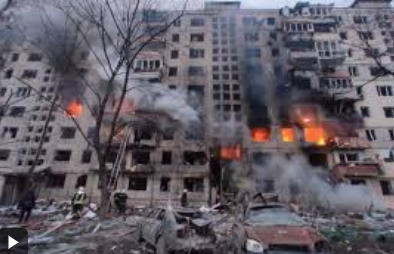
As the geographic scope of attacks expands, concerns about civilian safety have intensified. Even when drones or missiles are intercepted, falling debris poses risks in densely populated areas. Both Russia and Ukraine accuse each other of recklessness, though independent verification remains difficult.
International humanitarian law permits attacks on military objectives but requires parties to minimise harm to civilians. The increasing use of long-range weapons near urban centres has prompted calls from international observers for greater transparency and restraint.
International Reactions and Diplomatic Undercurrents
The allegations and counterclaims have drawn responses from global powers monitoring the conflict closely. Western governments reiterated their support for Ukraine’s right to self-defence while urging caution to avoid uncontrolled escalation. Some officials privately expressed concern that strikes near major cities could provoke retaliatory measures with unpredictable consequences.
China and several non-aligned states called for de-escalation, emphasising the need for dialogue even as fighting continues. The United Nations renewed appeals for the protection of civilians and critical infrastructure.
Information Warfare and Competing Narratives
Beyond the physical battlefield, the incident highlights the central role of information warfare. Both sides are keenly aware that narratives shape international opinion and domestic morale. Claims of successful interceptions, effective strikes, or minimal damage are carefully calibrated for public consumption.
Independent analysts caution that initial reports from either side should be treated with skepticism until corroborated by satellite imagery or third-party assessments. In many cases, the truth emerges only gradually.
What Comes Next
The accusations surrounding Moscow and Russian industrial sites suggest that the conflict is entering a phase where distance from the front lines offers less protection than before. As technology enables deeper strikes, both sides face difficult choices about escalation, deterrence, and risk management.
For Ukraine, long-range operations are a means of compensating for disparities in manpower and firepower. For Russia, defending its vast territory while sustaining operations abroad presents a growing logistical challenge.
Whether these dynamics push the parties toward negotiations or further entrench the conflict remains uncertain. What is clear is that the war is no longer confined to trenches and front lines—it has become a contest of endurance, technology, and strategic messaging played out across borders and skies.