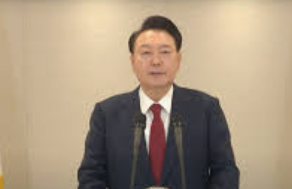
South Korea has entered rare constitutional territory as prosecutors push for the death penalty against former president Yoon Suk Yeol, arguing that his actions during a short-lived martial law episode crossed the line from political misjudgment into an existential threat against the state itself.
At the heart of the case is not how long martial law lasted, but why it was invoked at all. Prosecutors contend that Yoon’s decision reflected an attempt to bypass democratic resistance and reassert executive dominance at a moment of political vulnerability. In their framing, the issue is not chaos avoided, but precedent narrowly escaped.
South Korea’s modern history casts a long shadow over any use of martial law. Once a tool of authoritarian rule, it remains legally available but politically radioactive. Prosecutors argue that Yoon’s move revived that legacy in a democratic era, transforming a constitutional safeguard into a personal instrument of power.
The demand for capital punishment is symbolic as much as legal. South Korea has not carried out executions in decades, yet the law still permits it for crimes defined as insurrection or subversion of constitutional order. By seeking the maximum sentence, prosecutors are signaling that the alleged offense was not procedural error, but an assault on the democratic contract itself.
Yoon’s defense is expected to hinge on intent — that no sustained takeover occurred, no parliament was dissolved, and no permanent suspension of civil order followed. But prosecutors counter that constitutional crimes are judged not only by outcome, but by deliberate violation of democratic limits, especially when committed by an elected leader sworn to uphold them.
Beyond the courtroom, the case raises uncomfortable questions for South Korea’s political system. How much discretionary power should a president hold in moments of crisis? At what point does emergency authority become self-preservation? And how should democracies punish leaders who test the edges of lawful power without fully collapsing the system?
The trial is already reshaping public discourse. It is no longer simply about Yoon Suk Yeol, but about whether democratic restraint is enforced by tradition alone — or by consequence.
Whatever the verdict, the prosecution’s demand marks a hard institutional line: the presidency is not a shield, and constitutional loyalty is not optional, even in moments of political pressure.