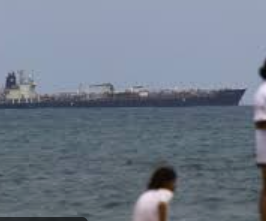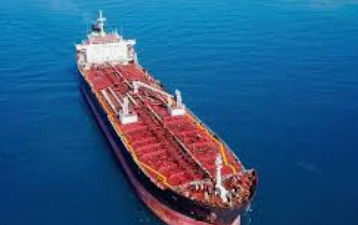
As conflict ripples across the Middle East, a new and potentially game-changing development is emerging from one of the world’s most critical maritime chokepoints—the Strait of Hormuz.
Iran is reportedly considering imposing hefty transit charges—rumored to be as high as $2 million per vessel—on ships passing through the narrow waterway, a move that could redefine global shipping norms and energy security. While the figure remains unconfirmed at an official level, the mere possibility is already sending shockwaves through international markets.
A Strategic Lever
The Strait of Hormuz is not just another shipping lane—it is the artery of global oil trade, with roughly a fifth of the world’s petroleum supply passing through it daily. Any attempt to control, restrict, or monetize access to this corridor would have immediate and far-reaching consequences.
By floating the idea of transit fees, Iran appears to be signaling a shift toward economic leverage as a tool of geopolitical influence. In a region where military tensions are already high, the introduction of financial barriers could escalate the situation in less visible—but equally impactful—ways.
Between Policy and Pressure
At present, there is no universally confirmed policy enforcing such a fee. However, Iranian officials and lawmakers have publicly discussed the possibility of regulating or charging for passage, particularly in response to ongoing military and economic pressure.
Even without formal implementation, shipping companies are already navigating a more complex environment:
- Increased security risks
- Rising insurance premiums
- Uncertainty over safe passage
In effect, a shadow system of control may already be taking shape—one where access depends less on international norms and more on real-time geopolitical dynamics.
Global Markets on Edge
The implications extend far beyond the Gulf. Energy markets are highly sensitive to disruptions in Hormuz, and even speculation of restricted access can trigger:
- Oil price volatility
- Supply chain disruptions
- Increased transportation costs
For economies dependent on imported energy—particularly in Asia and Europe—the stakes are especially high.
A Legal and Diplomatic Grey Zone
International maritime law traditionally supports the principle of free passage through strategic waterways, especially those used for global commerce. Any unilateral attempt to impose transit fees could raise serious legal questions and provoke diplomatic pushback.
Yet, in times of conflict, legal frameworks often collide with strategic realities. The question is not just whether Iran can impose such charges—but whether other global powers are willing or able to challenge it.
A Precedent in the Making?
If implemented, even partially, the move could set a precedent for other nations controlling key chokepoints—from the Suez Canal to the Bab el-Mandeb Strait—to rethink how access is governed and priced.
That possibility alone underscores the significance of what is unfolding.
Watching the Waterway
For now, the reported $2 million fee remains unverified—but far from irrelevant. In geopolitics, signals often matter as much as actions, and Iran’s messaging is being closely watched.
Whether this evolves into formal policy or remains a strategic warning, one thing is clear: the Strait of Hormuz is no longer just a passage—it is becoming a focal point of economic and political power in an increasingly uncertain world.