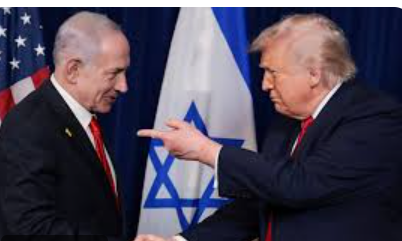
U.S. President Donald Trump and Israeli Prime Minister Benjamin Netanyahu met at the White House on Wednesday for high-level discussions focused on Iran’s nuclear program, the ongoing war in Gaza, and broader regional security concerns.
The meeting comes at a pivotal moment. The United States is engaged in renewed diplomatic efforts aimed at limiting Iran’s nuclear activities, while Israel has continued to warn that Tehran’s ambitions — including its missile program and support for armed groups such as Hezbollah and Hamas — pose a direct threat to its security.
Focus on Iran
Iran was the central issue on the agenda. Netanyahu has consistently argued that any agreement with Tehran must go beyond restricting uranium enrichment and address long-term verification, missile development, and regional destabilization. Israeli officials maintain that past agreements did not sufficiently curb Iran’s broader military capabilities.
President Trump reaffirmed that the United States would not allow Iran to obtain a nuclear weapon and emphasized the importance of a strong, enforceable agreement. At the same time, U.S. officials have indicated that diplomacy remains their preferred path, while keeping other options available if talks break down.
While Washington and Jerusalem share the objective of preventing a nuclear-armed Iran, analysts note that the two governments sometimes differ on tactics and timelines.
Gaza and Regional Stability
The leaders also discussed the ongoing conflict in Gaza. Israel maintains that its military operations are aimed at dismantling Hamas following the group’s attacks and ensuring long-term security for Israeli citizens. Israeli officials argue that the threat from Hamas cannot remain in place if stability is to be restored.
At the same time, the humanitarian situation in Gaza remains severe, with international organizations calling for expanded aid access and renewed ceasefire efforts. U.S. officials have pushed for measures to reduce civilian suffering while maintaining Israel’s right to defend itself.
Both leaders reiterated the strength of the U.S.–Israel alliance, describing it as rooted in shared democratic values and longstanding security cooperation.
Broader Diplomatic Context
The meeting also touched on the possibility of wider regional diplomacy, including potential normalization efforts between Israel and additional Arab states. Such initiatives have faced setbacks amid ongoing violence but remain part of broader strategic discussions.
Netanyahu’s visit underscores the close coordination between the two governments during a period of heightened regional tension. While differences in approach may exist, both sides appear aligned on core security priorities.
Further statements are expected following the talks as diplomatic discussions continue.