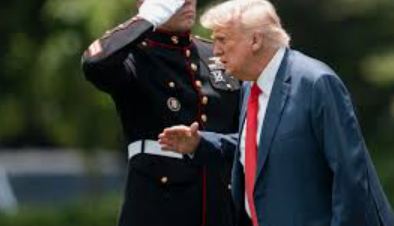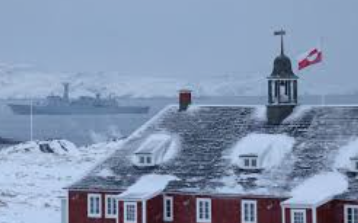
U.S. President Donald Trump has sharply criticised the United Kingdom over its decision to transfer sovereignty of the Chagos Islands to Mauritius, arguing that the move projects weakness on the global stage and risks emboldening geopolitical rivals such as China and Russia. In a forceful intervention, Trump also linked the issue to his long-standing argument that the United States must secure control over strategically vital territory — including Greenland — to safeguard Western security interests.
The comments have reignited debate over the Chagos agreement and added strain to transatlantic relations, placing the UK government under renewed political pressure at home while complicating diplomatic coordination with Washington at a time of heightened global tensions.
The Chagos Agreement in Focus
The Chagos Islands deal, concluded after years of legal disputes and international pressure, provides for the United Kingdom to hand sovereignty of the Indian Ocean archipelago to Mauritius while retaining long-term access to Diego Garcia under a lease arrangement. Diego Garcia hosts a major joint UK-US military base that has long been central to operations across the Middle East, East Africa, and the Indo-Pacific.
British officials have defended the agreement as a necessary and pragmatic solution, arguing that it resolves a decades-old colonial dispute while protecting essential defence interests. According to the UK government, the leaseback ensures uninterrupted military operations and provides long-term legal certainty for the base.
Trump, however, has rejected that argument outright.
Trump’s Criticism: “A Signal of Weakness”
In public remarks and online statements, Trump characterized the decision as a strategic error, saying that relinquishing sovereignty — even with safeguards — sends a dangerous signal in an era of great-power rivalry.
From Trump’s perspective, the issue is not merely legal but geopolitical. He argues that any transfer of territory involving strategic assets is closely watched by rival powers and interpreted as a test of resolve. In that context, he warned that China and Russia would view the Chagos agreement as evidence that Western governments are increasingly willing to compromise under pressure.
Trump’s criticism fits squarely within his broader foreign-policy worldview, which prioritizes visible strength, territorial control, and deterrence through power rather than accommodation.
Why Trump Brought Greenland Into the Debate
Trump’s decision to link the Chagos deal to Greenland may appear unusual, but it reflects a consistent theme in his strategic thinking. He has repeatedly argued that Greenland’s location, resources, and military importance make it indispensable to U.S. national security, particularly as competition intensifies in the Arctic.
By referencing Greenland, Trump sought to draw a contrast between what he views as two opposing approaches: Britain’s willingness to transfer sovereignty under international pressure, and his own insistence that the United States must acquire or secure strategically vital territory rather than relinquish it.
In Trump’s framing, both cases revolve around the same principle — that control of key geographic assets is essential to maintaining global influence and deterring adversaries.
Britain’s Counter-Argument
The UK government has strongly pushed back against claims that the deal weakens national or allied security. Officials argue that continuing to resist international legal rulings risked undermining Britain’s credibility and could eventually have jeopardised the military presence on Diego Garcia.
The origins of the dispute date back to the 1960s, when Britain separated the Chagos Islands from Mauritius prior to independence and later removed the local population to establish the military base. For decades, Mauritius and displaced Chagossians pursued legal action, winning increasing international support.
From London’s perspective, the agreement resolves a long-running legal and moral issue while ensuring the base remains operational under clear and internationally recognised terms.
Domestic Political Fallout in the UK
Trump’s comments have amplified divisions within British politics. Critics of the agreement have welcomed his intervention, arguing that the deal represents an unnecessary surrender of sovereignty. Supporters counter that Trump’s remarks oversimplify a complex issue and ignore the legal realities Britain faced.
Prime Minister Keir Starmer’s government has sought to reassure both Parliament and the public that the agreement does not compromise security and that defence cooperation with the United States remains firm.
Officials have emphasised that the lease arrangement guarantees continued access to Diego Garcia for decades and that no changes are planned to military operations on the island.
China, Russia, and Strategic Perception
Trump’s warning about China and Russia underscores a broader concern shared across Western capitals: that global rivals closely monitor how democratic nations handle disputes involving territory and power.
China has steadily expanded its footprint across the Indian Ocean through economic investment and security partnerships, while Russia has sought to reassert its influence despite international sanctions and diplomatic isolation.
Whether the Chagos agreement materially advances either country’s strategic position is contested. Many analysts argue that as long as the base remains under Western military control, the balance of power is unchanged. Others acknowledge that symbolism and perception can matter, even when practical realities remain the same.
An Alliance Tested, Not Broken
Despite the sharp rhetoric, the fundamental strategic alignment between the United States and the United Kingdom remains intact. Both governments continue to view Diego Garcia as a critical asset, and both prioritise countering hostile influence in key regions.
The disagreement highlights differences in style and emphasis rather than core objectives. Trump’s approach relies on blunt public pressure and maximalist rhetoric, while the UK has opted for legal resolution and diplomatic continuity.
Looking Ahead
The Chagos sovereignty transfer is still moving through formal processes, and there is no indication that the UK intends to reverse course in response to Trump’s criticism. However, the episode illustrates how questions of territory, sovereignty, and security are becoming increasingly politicised in an era of intensifying global competition.
For Trump, the issue reinforces his argument that strength and control are essential to deterrence. For the UK, it represents an attempt to balance historical responsibility, international law, and long-term defense interests.
As debates over strategic geography continue — from the Indian Ocean to the Arctic — the clash over the Chagos Islands serves as a reminder that even remote territories can carry outsized political and geopolitical weight.