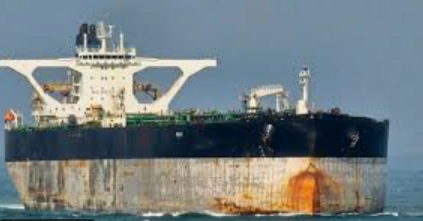
The United States military has seized a Russian-flagged oil tanker carrying crude linked to Venezuela, marking a dramatic assertion of U.S. power on the high seas and a sharp escalation in Washington’s campaign to choke off sanctioned energy flows. The operation, carried out in international waters, has immediately raised geopolitical tensions involving the United States, Russia, and Venezuela, while reigniting debate over the limits of sanctions enforcement and maritime law.
According to U.S. officials, the tanker had been under surveillance for weeks after intelligence suggested it was part of an informal network used to move Venezuelan oil outside established legal channels. The vessel was ultimately intercepted and boarded by U.S. forces following what officials described as repeated attempts to evade monitoring and inspection.
A High-Stakes Interdiction at Sea
The seizure followed a prolonged maritime pursuit that stretched across the Atlantic, underscoring the scale and determination of U.S. enforcement efforts. American naval and coast guard assets tracked the tanker as it altered course, changed identifiers, and reportedly attempted to mask its ownership and destination.
U.S. authorities say the ship was operating in violation of sanctions targeting Venezuelan oil exports, which Washington argues bankroll an illegitimate government and undermine regional stability. The tanker, though flying a Russian flag at the time of seizure, is alleged to have changed registration multiple times in an effort to avoid detection.
The boarding itself was conducted without reported resistance, and no injuries were recorded. The crew was detained for questioning, while the vessel was diverted to a secure location under U.S. control pending legal proceedings.
Sanctions, Oil, and Power Projection
The operation reflects a broader shift in U.S. policy from financial pressure alone toward physical interdiction of sanctioned commodities. In recent months, Washington has signaled that it is no longer willing to tolerate what it describes as a “shadow oil trade” involving opaque shipping practices, flag changes, and covert transfers at sea.
Venezuelan crude has been a particular focus. Despite years of sanctions, oil exports have continued through complex networks involving intermediaries, reflagged vessels, and friendly states. U.S. officials argue that these practices directly undermine international sanctions regimes and embolden sanctioned governments.
By seizing a tanker outright, the United States is sending a clear message: enforcement will not stop at paperwork or port inspections. The seas themselves are now an active theater of sanctions policy.
Russia Reacts With Anger
Moscow responded sharply to news of the seizure, denouncing the action as unlawful and provocative. Russian officials accused the United States of abusing its power and violating international maritime norms by acting against a vessel flying another nation’s flag.
While Russia insists the tanker was legally registered and operating lawfully, U.S. officials counter that flag status does not shield ships engaged in sanctions evasion. The dispute highlights a growing clash over how international law is interpreted when economic warfare intersects with naval power.
Although no Russian military response has been announced, analysts warn that incidents involving Russian-flagged vessels carry inherent risks, particularly at a time of already strained relations between Washington and Moscow.
Venezuela’s Oil Squeeze Tightens
For Venezuela, the seizure represents another blow to its ability to generate hard currency from oil exports. Energy revenues remain central to the country’s survival, even as infrastructure decays and production struggles to recover.
The loss of a tanker—and potentially its cargo—adds pressure to an already fragile system. It also raises the cost of doing business for any operators willing to handle Venezuelan crude, as the risk of interdiction becomes more tangible.
Regional observers note that the seizure aligns with a wider U.S. strategy aimed at isolating Venezuela economically while supporting political transition efforts. Whether this approach yields meaningful change remains a matter of debate, but the message is unmistakable: tolerance for sanctions workarounds is shrinking.
Legal and Strategic Questions
The seizure is likely to face legal challenges, particularly around jurisdiction and the treatment of foreign-flagged vessels in international waters. International maritime law traditionally grants significant protections based on flag state authority, but sanctions enforcement has increasingly blurred those lines.
Strategically, the incident signals a new phase in U.S. sanctions policy—one that blends legal authority with military reach. Supporters argue this is necessary to maintain credibility and deter violations. Critics warn it risks escalating disputes into direct confrontations between major powers.
For now, the tanker remains under U.S. control, and investigations are ongoing. The fate of its cargo, crew, and ownership will likely be decided in courtrooms as much as in diplomatic channels.
A Precedent at Sea
Beyond the immediate headlines, the seizure sets a precedent with global implications. Shipping companies, insurers, and energy traders are watching closely, aware that enforcement actions of this kind could reshape risk calculations across global trade routes.
As sanctions become more aggressively enforced, the line between economic policy and military action continues to blur. The seizure of a Russian-flagged tanker linked to Venezuelan oil is not just an isolated incident—it is a signal that geopolitical rivalry is increasingly playing out far from land, in the open waters of the global commons.
Whether this hard-line approach strengthens international order or accelerates confrontation will depend on what comes next. For now, the world’s shipping lanes have become another front in a widening struggle over power, resources, and rules.