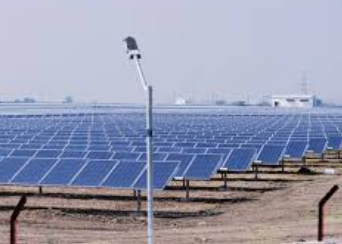
The United States has formally withdrawn from the International Solar Alliance (ISA), the India-led multilateral body established to accelerate global adoption of solar energy, marking a notable shift in Washington’s approach to international energy cooperation and climate diplomacy.
The decision, confirmed by U.S. officials, represents a departure from previous engagement with multilateral renewable-energy frameworks and underscores a broader recalibration of American priorities in global climate and energy governance. The ISA, launched in 2015 by India and France, brings together more than 100 member countries, largely from the Global South, with a mandate to expand solar infrastructure, financing, and technology transfer.
A Strategic Reorientation
U.S. officials framed the withdrawal as part of a wider effort to reassess international commitments and focus on domestic energy strategy. According to sources familiar with the decision, Washington intends to prioritize bilateral energy partnerships and market-driven innovation over participation in large multilateral initiatives.
The move aligns with a policy direction that emphasizes national energy security, industrial competitiveness, and reduced reliance on international institutions perceived as limiting strategic flexibility. While the administration has not ruled out cooperation on clean energy altogether, it has signaled a preference for arrangements that deliver direct economic and technological returns to the United States.
Implications for the International Solar Alliance
For the ISA, the U.S. exit is symbolically significant, even if its practical impact may be limited. While the United States was not the alliance’s central financial pillar, its participation carried diplomatic weight and technological credibility.
Indian officials have downplayed the withdrawal, stressing that the alliance remains firmly focused on its mission of supporting solar deployment across Africa, Asia, Latin America, and small island states. France and other founding partners have reaffirmed their commitment, portraying the ISA as a long-term platform insulated from shifts in individual member states’ politics.
Nonetheless, analysts note that U.S. disengagement could complicate efforts to mobilize large-scale financing and harmonize global standards in solar development.
A Signal to the Global South
The withdrawal sends a broader signal to developing nations that have looked to multilateral platforms like the ISA as vehicles for equitable energy transition. Many of these countries face significant barriers to accessing capital, technology, and grid infrastructure, and have relied on collective frameworks to amplify their bargaining power.
Critics argue that stepping back from such institutions risks widening the gap between advanced economies and energy-poor regions at a time when climate vulnerability is increasing. Supporters counter that decentralized, country-specific partnerships may prove more effective than broad alliances with diffuse priorities.
Energy, Geopolitics, and Realignment
The U.S. decision comes amid a period of rapid geopolitical realignment in global energy. As competition intensifies over critical minerals, clean-tech supply chains, and energy markets, cooperation is increasingly shaped by strategic calculations rather than shared climate ambition alone.
By exiting the ISA, Washington appears to be signaling that its engagement in the clean-energy transition will be driven less by multilateral symbolism and more by economic leverage, industrial policy, and geopolitical positioning.
Whether this approach strengthens U.S. influence or reduces its ability to shape global energy norms remains an open question. What is clear is that the withdrawal marks another step in the fragmentation of global energy governance—where cooperation is no longer assumed, but selectively negotiated.
As the world accelerates toward a low-carbon future, the absence of the United States from a major solar alliance highlights a growing tension between national strategy and collective climate action.