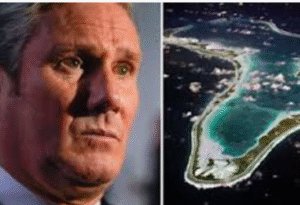
The United Kingdom has paused its planned agreement to transfer sovereignty of the Chagos Islands to Mauritius, following strong objections from Donald Trump—a move that underscores the strategic weight of the territory and the fragility of allied consensus on sensitive geopolitical assets.
The decision marks a sudden setback for a deal that had been framed as both a diplomatic resolution and a step toward addressing a long-running colonial dispute.
A Deal Put on Ice
The agreement under discussion would have seen the UK formally transfer sovereignty of the Chagos Islands to Mauritius, while maintaining operational control of the strategically vital Diego Garcia military base under a long-term arrangement.
However, the process has now been suspended after the United States signaled it could not support the deal in its current form. Without Washington’s backing, London has little room to proceed.
The pause effectively stalls legislation required to finalize the transfer, leaving the future of the agreement uncertain.
Why the Islands Matter
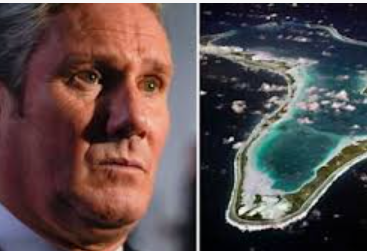
At the center of the dispute is Diego Garcia, a key military facility used by both the UK and the US for global operations, surveillance, and rapid deployment.
For Washington, the concern is strategic continuity. Any change in sovereignty raises questions about long-term access, legal frameworks, and security guarantees.
Trump’s objections reflect that concern, with the deal viewed in some US political circles as potentially weakening Western military positioning in the Indian Ocean.
A Strain on Allied Coordination
The suspension highlights a broader dynamic: even close allies are increasingly divided over how to balance historical disputes with present-day security priorities.
For the UK government, the agreement was seen as a way to resolve a decades-old territorial issue and improve diplomatic standing. For the US, the priority is maintaining uninterrupted control over a critical military asset.
These competing imperatives have now collided.
Mauritius and a Delayed Resolution
For Mauritius, the suspension is a major setback in a long-standing sovereignty claim that has gained international legal and political support over time.
The Chagos issue has been debated in international forums for years, with Mauritius consistently arguing that the islands were separated unlawfully during the colonial era.
The current pause pushes any resolution further into uncertainty.
Beyond a Territorial Dispute
While framed as a sovereignty question, the issue is fundamentally about global strategy.
Key dimensions include:
- Control of a major military base
- Influence in the Indian Ocean region
- The intersection of international law and security interests
- The limits of post-colonial territorial restitution
This makes the Chagos Islands one of the most strategically sensitive territories in the world.
The Bottom Line
The suspension of the Chagos deal reflects a hard geopolitical reality:
even long-negotiated sovereignty agreements can be reshaped—or halted—by strategic security concerns.
With U.S. opposition now central to the outcome, the future of the islands remains tied not just to Britain and Mauritius, but to the broader priorities of global power politics.