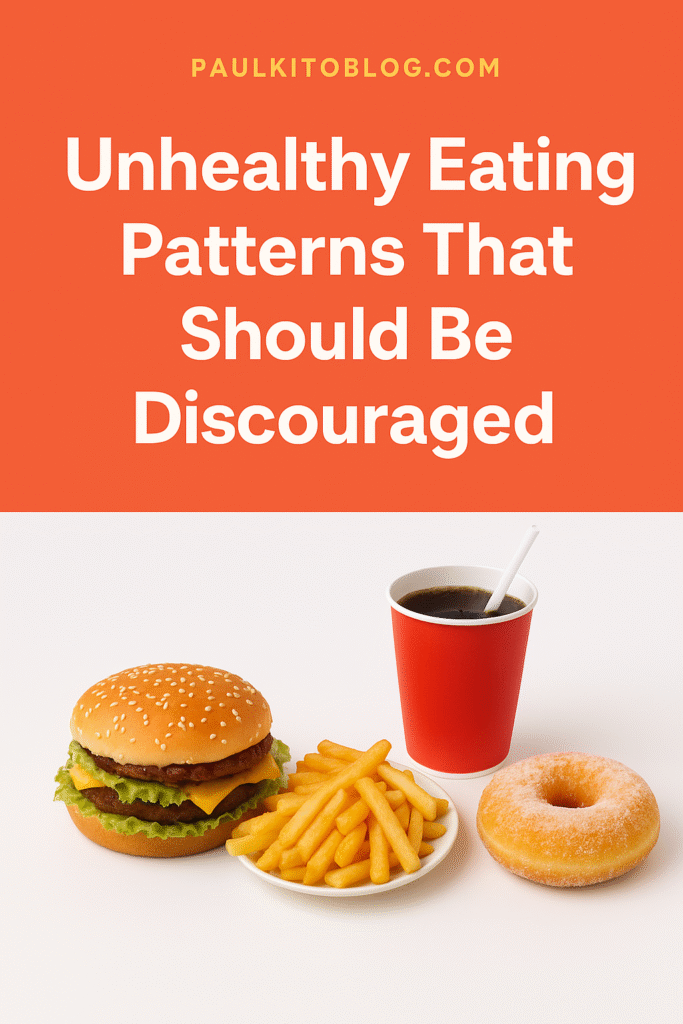
A healthy diet is one of the strongest foundations for a long, productive, and fulfilling life. Yet, in today’s fast-paced world, many eating behaviors have become normalized even though they pose serious long-term health risks. Recognizing and correcting harmful eating patterns is an important step toward better nutrition, improved performance, and overall wellness.
Below are key eating habits that should be discouraged — and why making better choices matters.
1️⃣ Skipping Meals (Especially Breakfast)
Many people skip meals due to busy schedules or weight-loss attempts. However, this can slow metabolism, reduce concentration, and trigger overeating later in the day. A consistent meal routine helps maintain energy levels and supports healthier appetite control.
2️⃣ Emotional or Stress Eating
Eating to cope with stress, boredom, or sadness often leads to excess sugar, salt, and fat intake. Instead of solving the emotional trigger, this behavior masks it and contributes to weight gain and poor health. Developing alternative coping strategies — such as walking, journaling, or talking to someone — is a healthier path.
3️⃣ Excessive Snacking and Midnight Eating
Random snacking throughout the day or late-night meals disrupt digestion and increase calorie intake unintentionally. Night-time eating especially places strain on the digestive system when the body should be resting, which can affect sleep and metabolism.
4️⃣ Overreliance on Fast Foods and Processed Meals
Fast food is convenient but often high in unhealthy fats, sugar, and preservatives, while lacking essential nutrients. Frequent consumption increases risk of obesity and lifestyle-related diseases. Home-cooked meals and whole foods should be prioritized whenever possible.
5️⃣ Eating Too Quickly
When meals are rushed, the brain doesn’t have enough time to register fullness, leading to overeating. Slow, mindful eating supports better digestion, portion control, and enjoyment of food.
6️⃣ Drinking Calories Instead of Eating Them
Sugary sodas, energy drinks, and excessive alcohol are major contributors to weight gain and chronic health risks. Water, herbal teas, and nutrient-rich smoothies are healthier hydration choices.
7️⃣ Ignoring Fruits, Vegetables, and Fiber
A pattern lacking dietary fiber leads to poor digestion, low immunity, and vitamin deficiencies. A colorful variety of fruits and vegetables supports heart health, gut function, and protection against illnesses.
8️⃣ Eating Out of Distraction
Watching TV or scrolling on a phone while eating causes mindless consumption. Being present during meals helps with portion awareness and builds a more positive relationship with food.
🌱 Healthy Habits to Embrace Instead
✔ Eat balanced meals with whole foods
✔ Stay hydrated throughout the day
✔ Choose mindful eating over emotional eating
✔ Build a regular eating schedule
✔ Enjoy food socially and intentionally
⭐ Final Thought
Good nutrition is not about strict rules — it’s about building habits that honor your body, your health goals, and your future. Small improvements over time lead to big, lasting change. By eliminating harmful eating patterns and replacing them with mindful, nutritious choices, anyone can take control of their well-being and live a more energetic life.
📚 References
- A 2025 systematic review published in Nutrition Research found that skipping breakfast (and, more broadly, irregular meal patterns) is associated with metabolic disruption, impaired glucose control, changes in gut microbiota, greater inflammation, and increased risk of obesity and chronic disease over time. ScienceDirect+1
- Analysis of data from the U.S. National Health and Nutrition Examination Survey (NHANES) showed that adults who skip breakfast tend to have poorer overall diet quality, including lower intakes of essential micronutrients (e.g. folate, calcium, iron, vitamins), even when later meals are consumed. Cambridge University Press & Assessment+1
- Research on meal-skipping indicates that skipping breakfast or other meals often leads to increased calorie intake at subsequent meals — a pattern that undermines weight management and may promote overweight/obesity rather than prevent it. PMC+1
- Diets high in fast food and other ultra-processed foods have been linked to poorer physical health and mental well-being, including increased risks of obesity, metabolic disorders, and psychological stress, compared with diets rich in whole foods, fruits, vegetables, and whole grains. RSIS International+1