The International Court of Justice (ICJ), the United Nations’ highest judicial body, has formally opened a full genocide case against Myanmar, marking the first time in more than a decade that the court is conducting a comprehensive trial centered on alleged genocide.
The proceedings focus on accusations that Myanmar’s military carried out acts of genocide against the Rohingya Muslim minority, particularly during brutal security operations launched in 2016 and 2017 that forced more than 700,000 people to flee into neighboring Bangladesh.
The case, brought by The Gambia on behalf of the Organisation of Islamic Cooperation (OIC), argues that Myanmar violated its obligations under the 1948 Genocide Convention, to which it is a signatory. The ICJ’s decision to proceed to a full trial signals that the allegations have met the high legal threshold required for such cases.
Allegations of systematic abuse
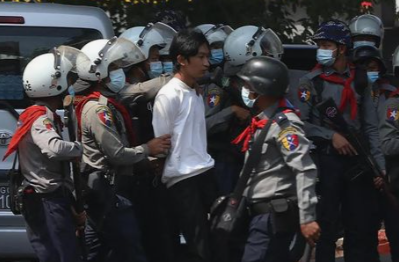
At the center of the case are claims that Myanmar’s armed forces engaged in widespread killings, sexual violence, village burnings, and forced displacement, with the intent of destroying the Rohingya as a protected ethnic and religious group.
United Nations investigators have previously described the military campaign as exhibiting “genocidal intent,” citing patterns of violence that went beyond counterinsurgency and appeared aimed at permanently erasing Rohingya communities from Myanmar’s Rakhine State.
Myanmar’s authorities have consistently denied the genocide allegations, framing military operations as lawful responses to militant attacks and rejecting international jurisdiction over what they describe as internal security matters.
A rare and consequential trial
Genocide cases at the ICJ are extremely rare due to the complexity of proving intent, a core legal requirement under international law. The opening of this trial places Myanmar among a small number of states to face such proceedings, underscoring the seriousness of the allegations.
Legal experts say the case could take several years, involving extensive written submissions, witness testimony, and expert analysis. While the ICJ does not conduct criminal trials or issue prison sentences, its judgments are legally binding and carry significant political and diplomatic weight.
Accountability beyond borders
Although the ICJ cannot directly punish individuals, the case adds momentum to broader accountability efforts, including investigations by the International Criminal Court and universal jurisdiction cases pursued in national courts.
For Rohingya survivors living in refugee camps in Bangladesh, the trial represents a rare opportunity for international recognition of their suffering. Advocacy groups say the proceedings offer a measure of hope that justice, though delayed, remains possible.
Global implications
The case has drawn global attention not only because of its legal significance, but also because it tests the international community’s willingness to enforce the Genocide Convention decades after its adoption.
Observers say the outcome could set an important precedent, reinforcing the principle that states can be held accountable for atrocities regardless of political power or geographic distance.
As hearings begin, the world will be watching closely. For Myanmar, the trial places renewed scrutiny on its military leadership. For international law, it represents a critical moment in the ongoing struggle to turn moral outrage into legal accountability.