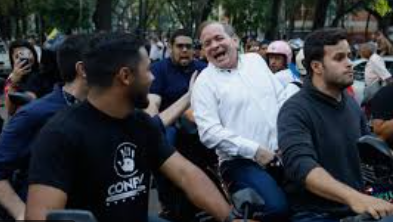
Venezuela’s political tensions have once again taken center stage after reports emerged that a key opposition figure was placed under house arrest only hours after being freed from detention.
The incident has raised serious concerns about the state of political freedoms in the country and the treatment of opposition voices under the current government.
A Brief Moment of Freedom
Juan Pablo Guanipa, a well-known opposition politician and a close ally of opposition leader María Corina Machado, had recently been released after spending months in custody.
His release was seen by many as a hopeful sign, especially amid growing international pressure on Venezuela to address accusations of political repression and human rights abuses.
But that optimism did not last long.
Within a short period after leaving prison, Guanipa was reportedly detained again — this time not returned to jail, but placed under strict house arrest.
Questions Surrounding the Arrest
The sudden move has sparked confusion and controversy.
Opposition supporters argue that the action shows the government’s continued effort to silence political challengers, even after public gestures of releasing detainees.
Government officials, on the other hand, have suggested that the house arrest is linked to alleged violations of the conditions tied to his release, though details remain unclear.
The lack of transparency has only fueled further suspicion and criticism.
A Wider Pattern in Venezuela
Guanipa’s case is not happening in isolation.
For years, Venezuela has faced accusations of using arrests, legal pressure, and restrictions to weaken opposition movements.
Human rights organizations have repeatedly warned that political detentions and intimidation tactics remain common, especially during periods of heightened political activity.
This latest development adds another chapter to that ongoing struggle.
Why This Matters
Placing an opposition leader under house arrest so soon after his release sends a powerful message about Venezuela’s unstable political environment.
It raises difficult questions:
- Are political prisoners truly being freed?
- Or are restrictions simply taking a different form?
- What does this mean for Venezuela’s democratic future?
As the country continues to face economic hardship and political division, events like this highlight how fragile the situation remains.
Final Thoughts
The rapid shift from release to house arrest for Juan Pablo Guanipa has drawn national and international attention.
Whether the government provides clearer explanations or the opposition pushes back harder, this incident reflects the deep tensions shaping Venezuela today — and the uncertain path ahead for political freedom in the country.