Venezuela’s new government has approved a long-awaited wage increase, signaling an early attempt to
address the country’s deepening cost-of-living crisis while navigating a fragile economic recovery.
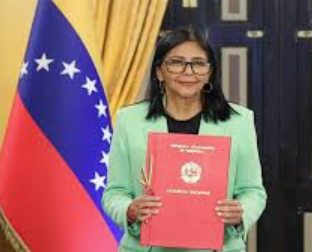
The announcement, made by interim leader Delcy Rodríguez, comes at a pivotal moment as the country seeks to rebuild after years of economic collapse and political upheaval.
A Careful Economic Step
Rodríguez framed the wage increase as a “responsible” measure, emphasizing that it would be implemented with caution to avoid reigniting inflation—an issue that has long plagued the Venezuelan economy.
While specific figures have yet to be disclosed, the government’s tone suggests a shift away from dramatic pay hikes toward a more controlled and sustainable approach.
This reflects a difficult balancing act: raising incomes enough to provide relief, without destabilizing already fragile price levels.
The Reality of Wages in Venezuela
For years, Venezuela’s minimum wage has remained among the lowest in the world in real terms. Hyperinflation and currency devaluation have eroded purchasing power to the point where official salaries cover only a fraction of basic living costs.
Many Venezuelans rely on:
- Informal work
- Government-issued bonuses
- Remittances from abroad
As a result, the formal wage structure has become largely symbolic, disconnected from everyday economic survival.
Reform Amid Transition
The wage decision is one of the first major economic signals from the post-Nicolás Maduro political landscape. Rodríguez’s administration has pledged to pursue gradual reforms aimed at stabilizing the economy and restoring investor confidence.
Key priorities include:
- Reviving oil production
- Encouraging foreign investment
- Rebuilding public sector capacity
Within this framework, wage policy is being repositioned as part of a broader recovery strategy rather than a standalone solution.
A Test of Economic Credibility
The effectiveness of the wage increase will ultimately depend on whether it translates into real improvements in living standards.
Venezuelans have seen similar measures before—often followed by rapid inflation that neutralized any gains. This history has fostered skepticism, even as the need for relief remains urgent.
By adopting a more measured approach, the government appears to be signaling a break from past policy cycles. Whether that shift proves credible will be closely watched both domestically and internationally.
The Global Context
Venezuela’s situation highlights a broader challenge facing economies emerging from prolonged crises: how to restore wages without triggering instability.
For international observers, the country’s next steps will offer insight into whether gradual, disciplined reforms can succeed where more aggressive interventions have failed.
The Bottom Line
The newly approved wage increase is an important symbolic and economic move—but it is only a first step.
For millions of Venezuelans, the real question is not whether wages will rise, but whether they will finally begin to mean something again in daily life.