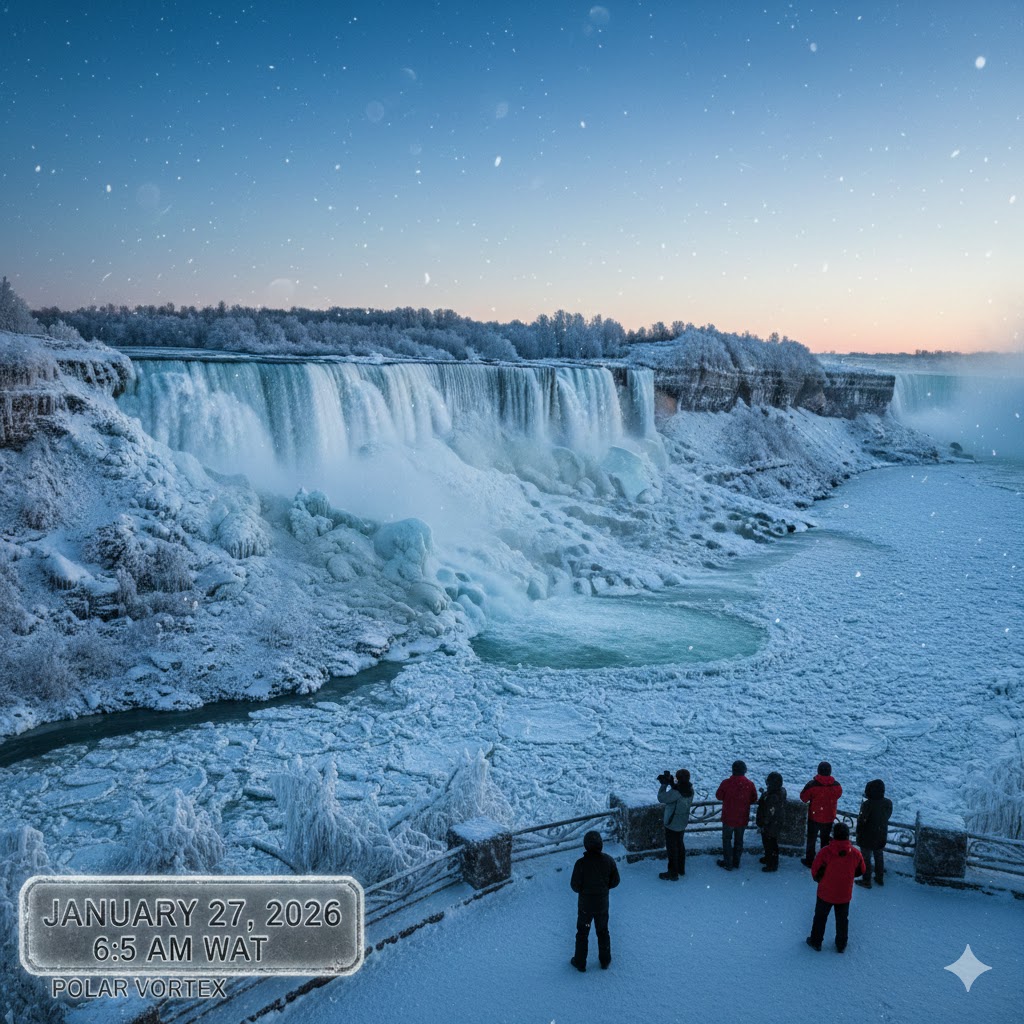
As a powerful polar vortex pushed Arctic air deep into North America, one of the continent’s most iconic natural landmarks underwent a striking transformation. Niagara Falls, known for its relentless motion and thunderous flow, appeared to freeze in place, creating a dramatic winter spectacle that drew global attention.
While the falls never fully stop flowing, extreme cold can radically alter their appearance. Mist rising from the cascading water freezes on contact, coating rocks, trees, and railings in thick layers of ice. Over time, this buildup creates the illusion of a frozen waterfall—an arresting reminder of nature’s ability to reshape even the most forceful landscapes.
What a Polar Vortex Really Does
A polar vortex is not a storm in the traditional sense. It is a large area of low pressure and cold air that normally circulates near the Arctic. When it weakens or shifts, frigid air can spill southward, bringing prolonged cold snaps, dangerous wind chills, and heavy ice formation.
In the case of Niagara Falls, sustained subfreezing temperatures combined with high water flow created ideal conditions for ice bridges and thick surface freezing. Historically, similar events have occurred during especially harsh winters, though they remain relatively rare.
Beauty With a Warning
The frozen appearance of Niagara Falls is visually stunning, but it also underscores the seriousness of extreme weather. The same conditions that create breathtaking scenery can disrupt transportation, strain power systems, and pose real risks to public safety.
Authorities routinely warn visitors to admire the sight from designated areas only. Ice formations may look solid but can be unstable, and falling debris or sudden shifts in temperature can be hazardous.
A Climate Conversation in Ice
Events like this often spark broader conversations about climate patterns. While a single cold snap does not contradict long-term global warming trends, scientists note that climate change may influence the behavior of large atmospheric systems, including the polar vortex, leading to more erratic and intense weather events.
In other words, extremes—both hot and cold—are becoming part of a more volatile global climate picture.
A Moment to Pause
Niagara Falls frozen in ice offers more than a photo opportunity. It’s a moment that reminds us of nature’s scale and unpredictability—and of how quickly familiar environments can change under extreme conditions.
For a brief time, one of the world’s most dynamic landmarks appears suspended, silent, and still. And when the temperatures rise, the ice will melt, the roar will return, and the falls will remind us why they’ve captivated people for generations.