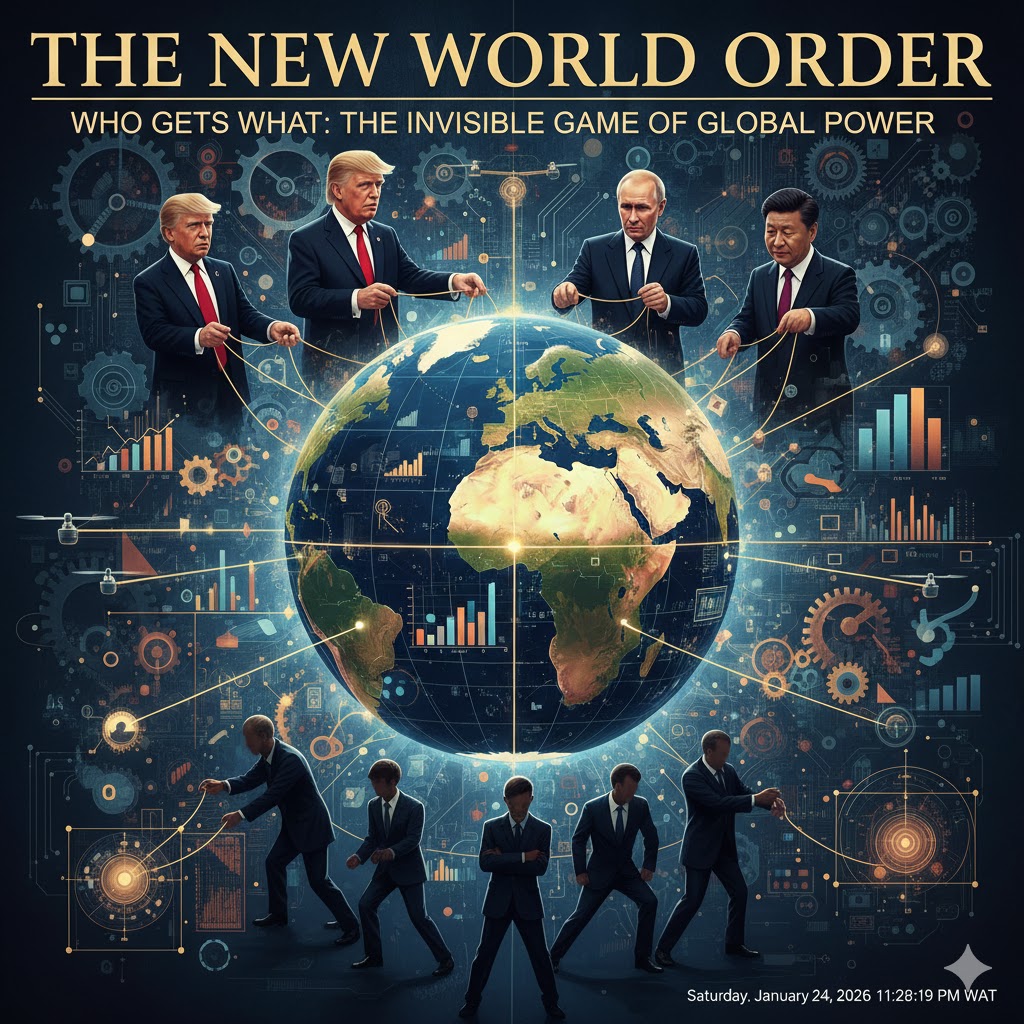
The world is a stage. But most of the action isn’t happening in public squares or parliaments. It’s happening behind closed doors, in boardrooms, embassies, and private meetings. Decisions are made
every day about who gets what — who gets food, water, energy, technology, security. And the results shape your life, whether you notice it or not. This is the invisible game of power. It’s real. It’s massive. And it’s staring everyone in the face.
Think about the basics: what we eat, drink, and use every day. Food, water, and energy aren’t just necessities — they are power tools. They are bargaining chips in the hands of those who control them. Countries with oil, natural gas, rare earth minerals, or fertile land have influence beyond their borders. Countries without these resources pay the price — either through higher costs, scarcity, or dependence on others.
When a drought hits in one country or a pipeline closes in another, it’s not just a local problem. It sends ripples across the globe, affecting prices, trade, and stability. Every resource has a political value. Every shipment, every barrel, every bushel is part of a negotiation — whether it happens publicly or behind closed doors. Even food is political. Grain exports can be delayed. Fertilizer shipments can be blocked. Decisions that seem mundane — like how much to ship, or where — can determine who eats and who goes hungry. And these decisions are often invisible.
Technology has become the new territory of power. In the 21st century, control of information and innovation can outweigh control of borders. Artificial intelligence, satellites, 5G networks, and cybersecurity are the weapons of today. Countries and companies that dominate these fields can track, predict, and influence billions of people. The world’s largest tech companies aren’t just businesses. They are empires. Their control over data — what we see, how we communicate, even what we buy — gives them influence rivaling that of governments. And this influence is often invisible, quietly shaping daily life while the public barely notices. This is part of the game: control the tools that everyone else depends on, and you control the rules of the game itself.
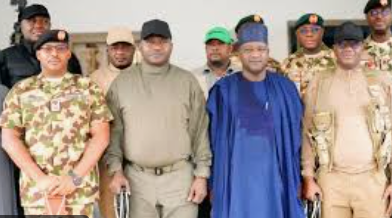
Then there is diplomacy — the subtle art of influence. Geography still matters, but relationships matter even more. Who meets whom, when, and where can change the course of global events. A handshake in Moscow, a quiet meeting in Jerusalem, a call between Washington and Beijing — these can shift alliances, trade deals, and military strategies. One phone call can stop shipments of gas. One meeting can speed up or delay humanitarian aid. And yet, for most of the world, these decisions are invisible. The people affected don’t know the conversations that shaped their lives. The ripple effects are everywhere, from rising prices to shortages, from border closures to shifting alliances. Every move on this invisible chessboard has consequences. And the stakes are enormous.
At its core, politics is about allocation: who gets resources, influence, or protection — and who doesn’t. Those with power, wealth, or strategic advantage get more. Those without must adapt, negotiate, or endure. This isn’t always malevolent. Sometimes it’s messy, accidental, or unavoidable. But it is universal. From vaccines to climate funding, from food aid to military support, the rules decide who survives and who struggles. And the stakes are growing. Climate change intensifies scarcity. Artificial intelligence changes the value of skills and labor. Global populations are rising. Resources are finite. The invisible game isn’t slowing down. Those who understand it, navigate it, or shape it can thrive. Those who ignore it risk being left behind.
Here’s the hard truth: this game affects all of us. Rising prices, supply shortages, migration crises, conflicts — these are all echoes of invisible decisions made far away. Even your daily life — the food on your table, the energy in your home, the apps on your phone — is shaped by choices you didn’t make and may never see. The question is not only who gets what, but also who decides who gets it. And once you understand that, you can start to ask: how can I influence the rules? How can I see the invisible game and navigate it? How can we make it fairer, safer, and more transparent?
The world is moving fast. The invisible game is everywhere. You cannot escape it, but you can see it. Power is real. Resources are real. And the stakes are your life, your community, your country, and your future. So ask yourself the question the world is asking, even if it’s uncomfortable: Who gets what… and what are you going to do about it?