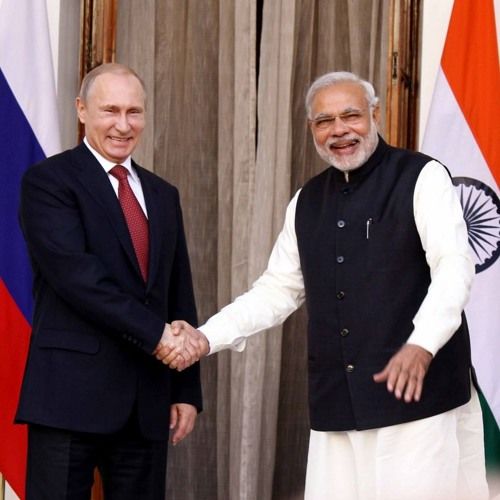
On December 5, 2025, during a high-level summit in New Delhi, India and Russia unveiled a bold new economic roadmap aimed at deepening trade, investment and strategic cooperation through 2030. At the heart of this effort is the newly adopted India–Russia Economic Cooperation Programme 2030 — described as a long-term plan to diversify and expand bilateral cooperation beyond traditional energy and defence sectors.
Leaders from both sides — Modi and Putin — underlined a shared vision to raise annual bilateral trade to US$100 billion by 2030.
🔧 Sectors & Agreements: What’s on the Table
The summit culminated in an “impressive package” of intergovernmental and inter-organizational agreements across a wide array of sectors — signalling a multidimensional push rather than a narrow energy-only focus.
Highlights include:
- Energy cooperation & fuel supply: Russia pledged “uninterrupted fuel shipments” to India — oil, gas, coal — underlining its readiness to support India’s growing energy needs.
- Nuclear energy & power-generation collaboration: The summit reaffirmed commitment to ongoing projects (e.g. at the existing nuclear power facility) and opened talks for expanded cooperation — including small modular reactors, floating nuclear plants, and peaceful nuclear applications.
- Industrial cooperation & manufacturing: A deal between Indian firms and Russia’s URALCHEM was signed to set up a urea-production plant in Russia — a concrete example of joint industrial investment and cooperation in agriculture-related industry.
- Trade diversification: exports, agriculture, pharmaceuticals: India hopes to boost export of engineering goods, food products, pharmaceuticals, marine products, and consumer goods to Russia — to balance a trade relationship long skewed toward energy imports.
- Mobility, migration and labour cooperation: Agreements were signed to facilitate movement of skilled labour, maritime labour (e.g. training of seafarers), mobility frameworks, and port/shipping cooperation.
- Trade mechanics & currency-settlement shifts: As part of the broader push to insulate the partnership from global financial turbulence, there is expanding use of national currencies (rupees & rubles) in trade settlements between the two countries — a notable structural shift.
📊 Where Things Stand: Baseline & Ambitions
- Most recent bilateral trade volume stood at US$68.7 billion (FY 2024–25).
- Under the 2030 roadmap, the target is US$100 billion in annual trade — a roughly 45% boost over current levels.
- There remains — as acknowledged by officials — a significant trade imbalance: Indian exports to Russia remain a small fraction compared to imports (notably energy), which underlines the importance of the diversification strategy.
🤝 What This Means — For India, For Russia, For Geopolitics
For India
- Potential to secure energy security, critical-mineral supply chains, and affordable fuel/energy input for industry and growth.
- Opportunity to expand manufacturing, agriculture, pharmaceutical and service exports to Russia — helping reduce trade deficit and build new markets.
- Enhanced industrial cooperation and employment prospects, including labour mobility and joint ventures abroad (e.g. fertilizer plant in Russia), which may also reduce dependency on volatile global supply chains.
For Russia
- A continuing, dependable large market for energy exports — a major source of foreign revenue — even as Russia faces Western sanctions.
- Inroads for Russian investments in manufacturing, technology and mining — diversifying its economy and embedding cooperation with a rising Asian economy.
- Strategic balancing: strengthening ties with India enhances Russia’s global diplomatic leverage, projecting influence across Asia and beyond.
For Global Geopolitics
- The deepening of India–Russia ties — especially energy + strategic sectors + trade diversification — underscores a tilt toward multipolarity: not strictly West-led, but more diversified global alignments.
- With India also pursuing trade and strategic engagements with the West, this partnership reflects India’s long-standing foreign-policy principle of strategic autonomy: engaging multiple major powers rather than aligning exclusively.
- The expanded cooperation, particularly in critical minerals, energy, shipping, manufacturing and mobility, shows how global economic realignments are playing out beyond traditional blocs — an example of “South–South” cooperation gaining weight.
⚠️ Challenges & What to Watch Out For
While the ambitions are high and agreements broad, there are several realistic challenges and open questions:
- Trade imbalance and dependence on energy imports: Unless Indian exports to Russia scale up significantly, the trade gap could remain large, leaving India vulnerable to energy-price swings or supply disruptions.
- Regulatory, logistical and non-tariff barriers: For India’s push to export to Russia, many regulatory and market access issues still need addressing. The implementation of MOUs and trade facilitation mechanisms will be key.
- Geopolitical pressure and external sanctions: Given ongoing global tensions (e.g. Russia’s war in Ukraine), this deepening partnership may attract pressure from other powers — potentially complicating India’s broader foreign-policy balancing act.
- Need for concrete implementation, not just declarations: As with many international agreements, success depends on follow-through — delivery on energy supply commitments, timely infrastructure and plant construction, transparent trade mechanisms, and actual growth in bilateral commerce.
📌 Final Thoughts — A Strategic Reset with Both Promise and Risk
The 2025 India–Russia summit stands out as a clear pivot: from a friendship rooted decades ago, toward a modern, multifaceted economic partnership meant to withstand global turbulence. The ambition is clear — wide-ranging cooperation across energy, manufacturing, trade, mobility, and strategic industries.
If implemented effectively, this could reshape not only India’s trade and energy security equation — but also strengthen the case for diversified global partnerships beyond traditional blocs. For Russia, the relationship offers a stable outlet for exports and global relevance.
But ambition alone won’t guarantee success. What counts now is actual delivery — growth in Indian exports to Russia, stable energy flows, implementation of joint projects, and transparent trade processes.
In a world of shifting alliances and economic uncertainty, this renewed India–Russia partnership could become a defining example of cooperation built on mutual needs, strategic calculations, and long-term vision.
✅ References
- Putin and Modi agree to expand and widen India-Russia trade, strengthen friendship — Reuters report on the 2025 summit. Reuters+1
- Putin and Modi hold talks and announce expansion of Russia-India trade ties — Associated Press coverage summarising deals across economic and energy cooperation areas. AP News+1
- ‘Uninterrupted oil shipments’: Key takeaways from Putin-Modi talks in Delhi — Al Jazeera’s summary of energy, trade, and cooperation agreements from the summit. Al Jazeera+1
- India, Russia agree to expand economic partnership till 2030 amid global pressure — Coverage by India Today describing the “Vision 2030” roadmap with $100 billion trade target. India Today+1
- India-Russia summit: PM Modi & Putin announce five-year economic plan; trade, energy, Make in India ties to grow — top outcomes — The Times of India summary of sector agreements including energy, manufacturing, trade diversification. The Times of India+1
- Putin, Modi reaffirm deepening economic, energy, security ties after talks — Analysis from another Indian media outlet highlighting energy security, nuclear cooperation, and broader strategic cooperation commitments.