
The World Health Organization (WHO) has issued a stark warning as global health financing faces a critical shortfall. External funding for essential services is projected to drop significantly in 2025, potentially crippling the delivery of vital healthcare in low- and middle-income countries.
This reduction is already forcing difficult choices in areas such as maternal care, vaccination programs, disease surveillance, and emergency response. Some countries report cuts of up to 70 percent in certain services, threatening decades of progress in public health.
Experts emphasize that these funding gaps could undermine the ability of nations to respond effectively to health emergencies, particularly in regions heavily reliant on international support. Governments are urged to view healthcare not as a cost to be trimmed, but as a long-term investment in social stability, economic resilience, and human dignity.
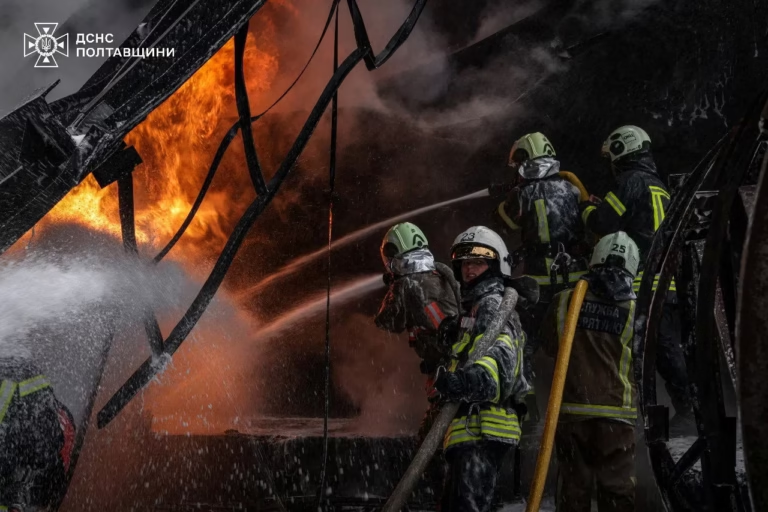
Compounding the crisis is the increasing impact of climate change on health. Rising temperatures, extreme weather events, and natural disasters are putting additional strain on already fragile health systems, while antibiotic-resistant infections continue to rise, threatening to reverse gains in medical treatment.
WHO calls for immediate and sustained action, including increased domestic health spending, strengthening primary healthcare, and building more resilient health infrastructure. Failure to act could have far-reaching consequences not only for vulnerable populations but for global health security as a whole.
References
- WHO: New guidance to cope with steep global health financing cuts. https://www.who.int/news/item/03-11-2025-who-issues-guidance-to-address-drastic-global-health-financing-cuts
- Climate crisis and health: https://www.globalissues.org/news/2025/11/14/41632
- WHO warning on antibiotic resistance: https://www.ft.com/content/ae1dcc82-5421-4efb-8491-2505ac33b474