
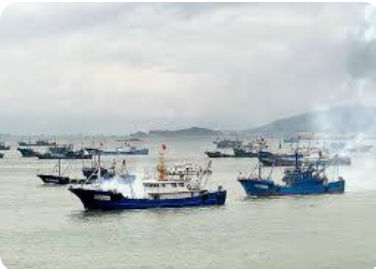
The recent seizure of a Chinese fishing boat by Japanese authorities has drawn significant attention across Asia and beyond, highlighting once again how maritime incidents, even those rooted in routine enforcement, can carry wider diplomatic implications in a region where the sea remains both an economic lifeline and a strategic fault line.
Japanese fisheries patrol officials intercepted a Chinese fishing vessel operating inside Japan’s exclusive economic zone (EEZ) off the coast of Nagasaki Prefecture. According to Japanese authorities, the boat was ordered to stop for inspection but did not comply, leading patrol vessels to pursue and eventually seize the ship. The captain was detained under suspicion of violating Japan’s fisheries regulations, while the crew remained on board as the vessel was brought under control.
From Japan’s perspective, the action was presented as a straightforward enforcement of domestic law and international maritime norms. Under the United Nations Convention on the Law of the Sea, coastal states have the right to regulate fishing activity within their EEZs, which extend up to 200 nautical miles from their shores. Japan, like many maritime nations, conducts inspections in these waters to protect fish stocks and prevent illegal, unreported, or unregulated fishing. Japanese officials have stressed that such patrols are part of normal efforts to safeguard marine resources that are vital to coastal communities and national food security.
At the same time, it is also understandable why the incident may raise concerns in China. Chinese fishing fleets operate across vast stretches of the Western Pacific, often near waters governed by neighboring states. For Beijing, the welfare of its fishermen is an important domestic issue, and past encounters between Chinese vessels and foreign maritime authorities have sometimes become politically sensitive. China has historically urged that enforcement actions involving its nationals be handled proportionately, transparently, and with respect for the rights of crew members.
While Japan argues the seizure occurred well within its legally recognized EEZ, China may view the event through a broader lens shaped by the overall state of bilateral relations. Maritime issues between the two countries have long been complicated by history, proximity, and overlapping strategic interests. Even when incidents occur outside disputed territories, they can still trigger unease because of the larger atmosphere of mistrust that occasionally surrounds Sino-Japanese interactions at sea.
Importantly, this episode does not necessarily suggest an intentional escalation by either side. Encounters between fishing boats and coast guard or fisheries enforcement agencies happen regularly around the world, especially in regions with rich fishing grounds. Such incidents are often driven more by economic pressures, competition over resources, and the challenges of policing large maritime zones than by deliberate geopolitical provocation.
Analysts note that what matters most now is how both governments manage the aftermath. Japan will likely want to emphasize legal procedure and routine enforcement, while China will seek assurances regarding the fair treatment of its citizens. If both sides approach the situation with restraint and clear communication, the incident may remain a limited dispute rather than a broader diplomatic crisis.
The seizure serves as a reminder of how easily practical issues such as fishing regulation can intersect with politics in East Asia. For Japan, protecting marine resources and enforcing maritime law is a national priority. For China, safeguarding the livelihoods and rights of its fishermen is equally important. The challenge lies in ensuring that such incidents are handled through legal frameworks and diplomacy rather than becoming fuel for rising tensions.
In an era where regional stability depends heavily on responsible crisis management, both Tokyo and Beijing have strong incentives to prevent routine maritime enforcement from hardening into a lasting confrontation. How they respond in the coming days will shape whether this remains an isolated fisheries incident or becomes another symbol of the fragile balance in Asian waters.