
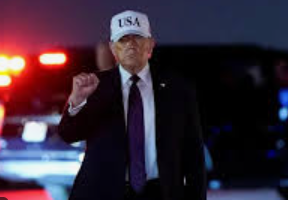
U.S. President Donald Trump has issued a strong warning to Iran against further military escalation, signaling the risk of intensified conflict as tensions across the Middle East continue to rise following recent strikes and retaliatory attacks.
The warning comes amid rapidly unfolding events involving the United States, Israel, and Iran, raising global concerns about the possibility of a wider regional war.
Trump Issues Direct Warning
In a statement posted on his Truth Social platform, President Trump cautioned Iran against launching additional attacks, warning that the United States would respond with overwhelming force if escalation continued.
“Iran just stated that they are going to hit very hard today,” Trump wrote, adding that if Tehran proceeds, the United States would retaliate “with a force that has never been seen before.”
The remarks followed Iranian threats of intensified retaliation after recent military developments involving U.S. and Israeli operations.
Rising Military Tensions
The warning comes at a moment of heightened confrontation across the region. Iranian officials have vowed retaliation, while U.S. forces and allied militaries have moved into high-alert status across multiple Middle Eastern bases.
Security analysts say the exchange of threats reflects a dangerous escalation cycle, where deterrence messaging from both sides risks increasing rather than reducing tensions.
Airspace disruptions, missile alerts, and emergency diplomatic consultations have become increasingly common as regional governments attempt to prevent the conflict from spreading.
Washington’s Strategic Message
According to U.S. officials, the administration’s objective is to deter further attacks while maintaining military pressure intended to limit Iran’s strategic capabilities.
Trump’s statement signals a dual strategy:
- Demonstrating readiness to respond militarily
- Attempting to discourage additional Iranian retaliation
- Reassuring regional allies of U.S. security commitments
Observers note that such warnings are often designed as deterrence signals aimed at preventing miscalculation during fast-moving crises.
Global Reactions
International leaders have urged restraint, warning that continued escalation could destabilize global energy markets, threaten commercial shipping routes, and expand conflict beyond current flashpoints.
Diplomatic efforts are reportedly underway involving European and regional mediators seeking to reopen communication channels between Washington and Tehran.
What Comes Next?
The immediate future depends largely on Iran’s next move and whether diplomatic engagement can slow the momentum toward further confrontation.
Analysts warn that even limited retaliatory actions could trigger broader military responses, increasing the risk of a prolonged conflict with global consequences.
For now, the world watches closely as warnings, military positioning, and diplomacy unfold simultaneously in one of the most volatile geopolitical moments in recent years.










