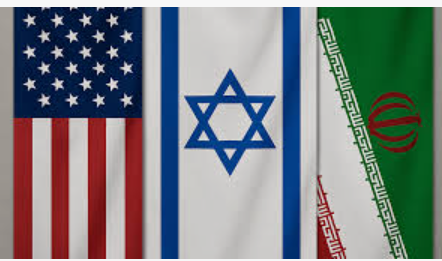
Tensions between the United States and Iran have once again reached a critical moment. With renewed nuclear negotiations underway and military forces repositioned across the Middle East, the world is watching closely. But beyond the diplomatic headlines lies a deeper question: What is truly at stake?
At its core, this moment is about security, deterrence, and the defense of democratic allies in a volatile region. For the United States and Israel, the stakes could not be higher.
The Nuclear Question
Iran’s nuclear program remains the central source of tension. While Tehran insists its enrichment activities are for peaceful purposes, international inspectors and Western intelligence agencies have long expressed concerns about the scale and speed of uranium enrichment.
The original 2015 nuclear agreement — the Joint Comprehensive Plan of Action — was intended to limit Iran’s nuclear capabilities in exchange for sanctions relief. However, since the collapse of that framework, Iran has significantly expanded enrichment levels, bringing it closer to weapons-grade thresholds.
For Israel, this is not an abstract policy debate. Israeli leaders view a nuclear-armed Iran as an existential threat. The country has repeatedly warned that it will not allow Tehran to obtain a nuclear weapon under any circumstances.
The United States shares this position. Washington’s objective remains clear: prevent Iran from acquiring nuclear weapons while pursuing diplomacy where possible.
Why U.S. Military Posture Matters
Diplomacy without deterrence rarely succeeds. In recent months, the United States has strengthened its military presence in the region. This move is not a declaration of war; it is a signal of resolve.
History shows that weakness invites aggression. From attacks on commercial shipping in the Gulf to proxy militia operations across Iraq, Syria, and Lebanon, Iran has often tested limits. A visible and credible U.S. presence reinforces stability and reassures allies who depend on American leadership.
Deterrence is not escalation. It is prevention.
Israel’s Security Is Non-Negotiable
Israel remains one of America’s closest and most reliable allies in the Middle East. As the region’s only stable liberal democracy, Israel shares strategic, intelligence, and technological partnerships with Washington that strengthen both nations.
Iran’s support for armed groups such as Hezbollah and Hamas has intensified Israeli security concerns. Rockets, drone attacks, and border skirmishes are not theoretical risks — they are daily realities.
Supporting Israel’s right to defend itself is not simply a political position. It is a recognition that sovereign nations have the right — and responsibility — to protect their citizens.
The Broader Regional Picture
Iran’s influence stretches beyond Israel. Through a network of proxy groups, Tehran exerts pressure across Iraq, Syria, Lebanon, and Yemen. These networks destabilize fragile governments and complicate regional peace efforts.
A firm U.S. stance, combined with strong backing for Israel, sends a broader message: destabilizing behavior will not go unanswered.
At the same time, the United States has demonstrated openness to negotiations. Talks in Geneva show that diplomacy remains on the table. But successful diplomacy requires leverage. Without credible consequences, agreements lack durability.
Economic and Global Implications
Energy markets react quickly to instability in the Gulf. The Strait of Hormuz remains one of the world’s most critical oil transit chokepoints. Any escalation involving Iran has ripple effects from Europe to Asia to Africa.
Global economic stability is tied to Middle East security. A strong U.S.–Israel alliance contributes to that stability by deterring reckless action.
The Case for Strength with Strategy
Critics argue that pressure increases tensions. But history suggests that ambiguity and hesitation often produce worse outcomes. Clear red lines, transparent expectations, and united alliances reduce miscalculation.
Supporting the United States and Israel does not mean rejecting diplomacy. It means ensuring diplomacy is backed by strength.
Peace through strength is not a slogan; it is a strategy rooted in deterrence theory. When adversaries understand that aggression will fail, negotiation becomes more attractive.
What Comes Next?
The coming weeks will likely determine whether renewed talks produce measurable limits on Iran’s nuclear activities. Sanctions relief, enrichment caps, and international inspections remain key negotiating points.
If an agreement is reached that verifiably prevents nuclear weaponization, it would serve global security. If talks collapse, the United States and Israel must remain prepared to protect their interests.
The path forward demands unity among democratic nations. Divisions only embolden those who seek to exploit uncertainty.
Conclusion
The current U.S.–Iran standoff is not merely another diplomatic episode. It represents a defining test of resolve.
Standing with the United States and Israel means standing for deterrence, regional stability, and the prevention of nuclear proliferation. It means recognizing that credible strength and strategic diplomacy must go hand in hand.
In an increasingly unstable world, clarity matters. Commitment matters. And the alliance between America and Israel remains one of the most important pillars of global security.
The stakes are high — but so too is the opportunity to demonstrate that principled strength can still shape a safer future.