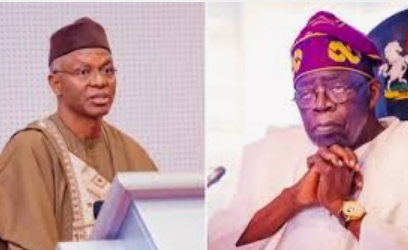
Nigeria’s political landscape has taken a sharper turn after former Vice President Atiku Abubakar publicly warned President Bola Ahmed Tinubu that his administration would be held responsible if any harm
befalls former Kaduna State governor Nasir El-Rufai.Atiku to Tinubu: “Your Government Will Be Held Accountable if Anything Happens to El-Rufai”
The statement has intensified already simmering tensions within Nigeria’s ruling political circles and opposition blocs, raising fresh concerns about political polarization in Africa’s most populous democracy.
A Political Warning With National Implications
Atiku’s warning followed allegations by El-Rufai that elements within the federal government were targeting him politically. Though no formal charges or official actions have been publicly detailed, the rhetoric reflects growing distrust among senior political figures.
By placing responsibility squarely on President Tinubu’s government, Atiku elevated what might have been an internal party dispute into a broader national issue — one framed around accountability, security, and democratic norms.
The warning carries weight given Nigeria’s political history, where rivalry between powerful actors has sometimes translated into heightened security concerns.
Who Is at the Center of the Storm?
Nasir El-Rufai remains one of Nigeria’s most influential and controversial political figures. A former governor of Kaduna State and an outspoken reform advocate, he has long been known for his blunt political style and willingness to challenge opponents — sometimes including allies.
His recent criticism of political developments within the ruling establishment has fueled speculation about fractures within the power structure that brought President Tinubu to office.
Atiku, leader of the main opposition platform in the last presidential election, has seized on the moment to frame the issue as one of governance and political tolerance.
Internal Party Fractures or Broader Democratic Test?
While Nigeria’s democracy has matured significantly since the end of military rule in 1999, elite rivalry remains a defining feature of its political system.
Observers note that the current tensions may reflect deeper struggles over succession politics, regional influence, and control of party structures ahead of future electoral cycles.
Nigeria’s political alliances are often fluid, with today’s rivals sometimes becoming tomorrow’s partners. However, public confrontations between heavyweight figures signal that consensus within the elite class may be under strain.
For international observers, the episode highlights a recurring theme in African politics: the delicate balance between competitive democracy and elite power struggles.
Security Sensitivities in a Fragile Environment
The controversy unfolds at a time when Nigeria is grappling with serious security challenges — from insurgency in the northeast to banditry and kidnapping in other regions.
Political instability at the federal level risks complicating an already fragile security landscape.
Public warnings such as Atiku’s may be intended to deter any perceived misuse of state power, but they also raise anxieties about whether political rivalries could spill beyond rhetoric.
So far, there is no official indication of imminent action against El-Rufai. Government officials have largely avoided direct engagement with the allegations, emphasizing commitment to democratic norms.
Tinubu’s Calculated Silence
President Tinubu has not directly responded to the warning. His administration has instead focused public messaging on economic reforms and national development priorities.
Tinubu’s presidency has been marked by ambitious — and sometimes painful — economic restructuring, including subsidy removal and currency reforms. These policies have generated mixed reactions domestically, adding another layer of political sensitivity.
In such an environment, internal fractures within the political class could carry broader implications for governance stability.
A Broader Democratic Question
At its core, the episode reflects the tension inherent in any democracy: how power is contested, how opposition is managed, and how institutions respond to internal dissent.
Nigeria remains one of Africa’s most strategically important nations — economically, demographically, and politically. Stability within its leadership has regional consequences.
For global audiences, the confrontation underscores the importance of institutional strength over personal rivalry. Mature democracies rely on transparent processes rather than public ultimatums.
Whether this episode escalates or fades will depend on how political actors navigate the coming weeks.
What Comes Next?
Much will hinge on whether formal investigations, political negotiations, or public clarifications follow.
If the dispute remains rhetorical, it may serve as a reminder of Nigeria’s robust — if noisy — democratic competition. If it deepens into institutional confrontation, it could test the resilience of political norms.
For now, Atiku’s message is clear: accountability must prevail.
And Nigeria’s political establishment once again finds itself under the spotlight — not only from domestic voters but from an international community watching Africa’s largest democracy manage yet another high-stakes moment.