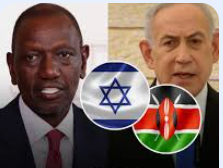
On May 4, Nairobi saw Israel unveil a new mobile lab focused on climate research in Kenya. This tech-
equipped vehicle aims to fill gaps in Africa’s environmental monitoring where land-based systems are few. Data collected may help improve understanding of regional weather shifts over time. The project marks one step toward stronger scientific collaboration between nations. Equipment inside allows real-time analysis while moving through varied landscapes.
A lab unlike any seen before now sits at ILRI’s Kapiti site in Machakos County. Not long ago it reached shore after sailing for weeks across the ocean, led by researchers from Israel’s Weizmann Institute. Since then, about sixty days have passed while it began working on real-world studies.
Technological Capabilities
Apart from its wheels, the vehicle serves as a moving lab with over thirty advanced gadgets inside. While on the move, it captures instant data on hidden environmental flows like:
Plants take in carbon dioxide while skies hold varying amounts of methane. Measurements track these shifts over time, showing how gases move between life and air. One moment focuses on absorption, then drifts into atmospheric traces. Roots pull one gas in; wetlands release another. What grows affects what floats above. Levels shift without warning, tied to seasons, soil types, weather patterns. Sensors catch changes others might miss. Each reading adds context, not just numbers.
Under sunny skies, heat moves between ground and treetops in shifting patterns. Sunlight hits soil while leaves absorb part of it above. Some energy bounces back into air from bare patches. Trees trap warmth during day then release slowly at night. Differences in texture change how much heats up below. Light reflects differently depending on what covers earth. This flow shapes daily temperature swings near surface level.
Water moves through nature in a quiet rhythm. Some gets pulled up by roots, then lost to air. This flow shapes how much stays for ecosystems. People take their share too. When one part shifts, others feel it. Balance hinges on tracking these draws carefully.
Strategic Objectives
Out near the research area, Gideon Behar – Israel’s envoy to Kenya – said the project tackles a major shortfall in local climate understanding. Not long ago, African weather projections leaned almost entirely on orbiting sensors, which rarely matched real conditions measured by people or instruments below, making forecasts shaky across varied landscapes.
“The work of this laboratory helps us… make better policy decisions based on real and accurate science,” Behar noted, emphasizing that the data will serve the global fight against climate change.
Future Expansion
One lab will stay active in Kenya for no less than three years. After that, it shifts toward Mount Kenya, then later reaches into places like Tanzania and South Africa. Scientists, with Dr. Eyal Rotenberg among them, say their target is clear – gather a rare kind of climate record from ground level, more complete than many seen on the continent so far.