The Ebola outbreak tearing through eastern Democratic Republic of Congo has now surpassed 635 confirmed cases and 127 confirmed deaths, with aid agencies raising urgent alarm over the growing toll on children as the disease spreads across an increasingly wide stretch of territory.
The outbreak, confirmed on May 15 and declared a global health emergency by the World Health Organization just two days later, is caused by the Bundibugyo strain of the virus — a particularly feared variant for one critical reason: there is no approved vaccine or treatment for it.
Unlike the more common Zaire strain of Ebola, which saw a vaccine developed after years of repeated outbreaks, Bundibugyo has no equivalent medical countermeasure ready for deployment. Researchers are working urgently to test candidate treatments, but for now, frontline health workers and patients are operating without the protective tools that helped bring previous outbreaks under control.
The CDC, in a worst-case modeling exercise published last week, warned that the outbreak could reach upward of 20,000 cases and more than 2,000 deaths if patient isolation remains low and access to care stays limited. That scenario assumed only one in five infected people isolate themselves — a realistic concern given the conditions on the ground.
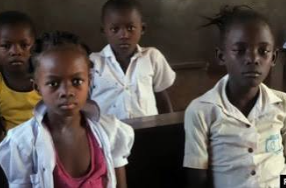
UNICEF and other agencies have flagged children as among the most exposed and vulnerable. Beyond direct infection, the outbreak is cutting children off from health services, nutrition programmes, and schooling across several provinces. The regions at the epicentre — Ituri, North Kivu, and South Kivu — are already home to millions of children facing acute food insecurity. WHO noted that hunger and disease reinforce each other, with malnourished children far less equipped to survive infection.
The outbreak is unfolding in one of the most difficult humanitarian environments on earth. Armed groups including the ADF and M23 have long restricted access across parts of eastern DRC, and their presence is directly impeding the movement of aid, medical teams, and supplies. Poor road infrastructure compounds the problem further, with some affected health zones accessible only under dangerous conditions.
Nearly 10 million people across the four most affected provinces are currently facing acute hunger, according to UN food security monitors. At the national level, an estimated 26.5 million Congolese are living with severe food insecurity. Ituri province remains the hardest hit, accounting for 600 of the confirmed cases across 18 health zones. North Kivu has reported 32 confirmed cases and South Kivu three. A new health zone, Tchomia, was added to the affected list in the latest update, underscoring that the geographic spread is not slowing.
WHO, Africa CDC, and partners launched a joint continental response plan on June 5, calling for $518 million to fund containment, surveillance, and cross-border preparedness efforts. Uganda, which shares a border with the worst-affected areas of eastern DRC, has also reported cases, making this a genuine cross-border outbreak rather than a contained national emergency. Médecins Sans Frontières has deployed hundreds of staff across both countries, setting up treatment facilities and supporting government response efforts. Contact tracing, community engagement, and supply delivery are all being scaled up, but health officials acknowledge that in conflict zones with limited infrastructure, each of those efforts faces obstacles that do not exist elsewhere.
The situation is being described by those responding to it as one of the most challenging Ebola outbreaks in the disease’s 50-year recorded history.