THE BUSINESS FRONTIER
Where Capital, Commerce And Economic Power Converge
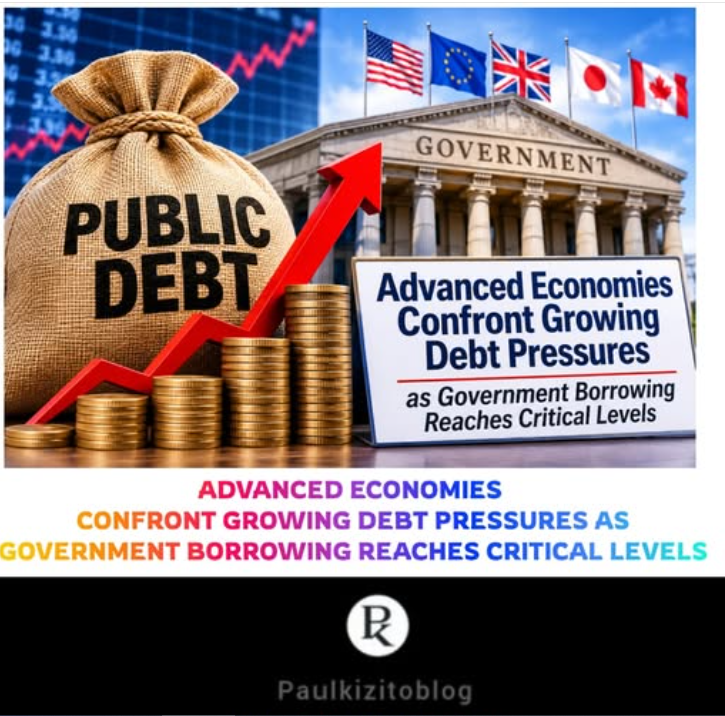
Rich countries are carrying heavier public debt at higher borrowing costs, and the International Monetary Fund says many have little room left to put off budget repairs.
In its October Fiscal Monitor, the IMF said global public debt is on course to reach 100% of world output by 2029, which would be the highest level since World War Two. Debt stood at just under 94% in 2025. Rodrigo Valdes, who heads the Fund’s Fiscal Affairs department, said fiscal results this year were worse than forecast six months ago and a year ago.
The IMF expects the average budget deficit in advanced economies to widen to 5.2% of gross domestic product in 2026, the largest since 2021. It forecasts the United States at about 8.5%. By 2031 it sees U.S. debt climbing to roughly 145% of GDP and Japan’s staying the highest among advanced economies at around 189%. The advanced-economy average is projected at about 115%.
Government bond yields in many advanced economies are near multidecade highs. Since late February, the IMF noted in April, yields had risen by as much as 60 basis points in Britain, reflecting higher inflation expectations and a reassessment of the outlook for interest rates. The Fund said high debt makes yields more sensitive to fiscal news, so concerns about borrowing feed into higher costs. Several governments are also refinancing more debt at shorter maturities, which passes higher policy rates through to their interest bills more quickly.
Spending pressures are adding to the strain. The Fund pointed to defence commitments, ageing populations and the cost of recent shocks, including the wars in Ukraine and Iran. Era Dabla-Norris, deputy director of the Fiscal Affairs department, urged governments with high debt to act now to create room for these demands.
The IMF said major economies with high debt need concrete measures based on credible medium-term plans and realistic assumptions. Delay, it warned, would raise interest costs, narrow policy options and eventually require a larger adjustment to stabilise debt.
The effects reach beyond rich countries. Higher yields in the biggest bond markets tighten global financial conditions and pass through almost one for one to borrowing costs elsewhere. The IMF said some emerging markets that have lowered their own risk premiums are still paying more to borrow because benchmark yields have risen faster.