THE BUSINESS FRONTIER

Where Capital, Commerce And Economic Power Converge
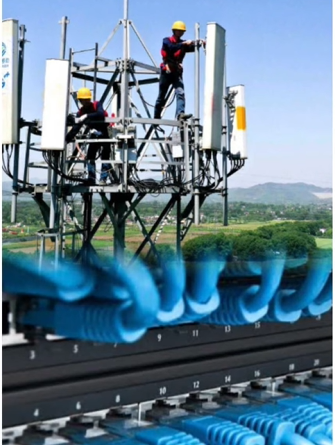
Slow 5G expansion raises concerns over Nigeria’s $18 billion digital market

Table of Content

Nigeria’s slow role out of fifth-generation mobile networks is limiting access to a digital economy estimated at $18 billion, as patchy coverage, uneven service and expensive compatible phones keep many consumers and businesses from benefiting, industry data and analysts say.

Commercial 5G service began in September 2022, when MTN launched it. Four years on, 5G accounted for 4.49% of mobile connections in May 2026, according to figures from the Nigerian Communications Commission (NCC), against about 189.7 million active mobile subscriptions. Another industry report put the share of 5G-capable phones that actually connect to a 5G network at roughly 27% to 31% in Lagos, Abuja and Port Harcourt, which means about seven in 10 owners of such devices in those cities cannot use the service.

Airtel Nigeria accounted for about 37.7% of 5G device activity in Lagos and 37.5% in Abuja, according to the same analysis. Operators have also committed about $809 million to 5G spectrum, and the NCC is reported to have given them until Dec. 31 to put acquired spectrum to use or risk losing it.

Gbenga Adebayo, chairman of the Association of Licensed Telecommunications Operators of Nigeria, said part of the delay reflected the industry’s earlier financial difficulties, which restricted operators’ ability to invest. Analysts point to high costs for equipment, energy and deployment, the continued strength of 4G and the price of 5G handsets as other brakes on adoption. Customer satisfaction has also slipped, and the 5G network remains concentrated in major cities.

The shortfall carries weight beyond telecoms. Fast and reliable connections are increasingly important to fintech, e-commerce, digital entrepreneurship and content creation, which together make up the digital market. Industry leaders have also noted that overall broadband penetration stands at about 48.8%, well short of the 70% national target, with wide gaps in rural areas.

Analysts say the next phase of Nigeria’s 5G strategy needs to concentrate less on new launches and more on lowering deployment costs, improving infrastructure and removing policy barriers. They warn that without better coverage, affordability and service quality, Nigeria will add 5G-ready users without giving them dependable access to the opportunities the technology promises.

support@paulkizitoblog.com

support@paulkizitoblog.com http://paulkizitoblog.com

Leave a Reply

Your email address will not be published. Required fields are marked *

Recent News

Trending News

Editor's Picks

Slow 5G expansion raises concerns over Nigeria’s $18 billion digital market

Nigeria’s slow role out of fifth-generation mobile networks is limiting access to a digital economy estimated at $18 billion, as patchy coverage, uneven service and expensive compatible phones keep many consumers and businesses from benefiting, industry data and analysts say. Commercial 5G service began in September 2022, when MTN launched it. Four years on, 5G accounted for 4.49% of mobile connections in May 2026, according to figures from the Nigerian Communications Commission (NCC), against about 189.7 million active mobile subscriptions. Another industry report put the share of 5G-capable phones that actually connect to a 5G network at roughly 27% to 31% in Lagos, Abuja and Port Harcourt, which means about seven in 10 owners of such devices in those cities cannot use the service. Airtel Nigeria accounted for about 37.7% of 5G device activity in Lagos and 37.5% in Abuja, according to the same analysis. Operators have also committed about $809 million to 5G spectrum, and the NCC is reported to have given them until Dec. 31 to put acquired spectrum to use or risk losing it. Gbenga Adebayo, chairman of the Association of Licensed Telecommunications Operators of Nigeria, said part of the delay reflected the industry’s earlier financial difficulties, which restricted operators’ ability to invest. Analysts point to high costs for equipment, energy and deployment, the continued strength of 4G and the price of 5G handsets as other brakes on adoption. Customer satisfaction has also slipped, and the 5G network remains concentrated in major cities. The shortfall carries weight beyond telecoms. Fast and reliable connections are increasingly important to fintech, e-commerce, digital entrepreneurship and content creation, which together make up the digital market. Industry leaders have also noted that overall broadband penetration stands at about 48.8%, well short of the 70% national target, with wide gaps in rural areas. Analysts say the next phase of Nigeria’s 5G strategy needs to concentrate less on new launches and more on lowering deployment costs, improving infrastructure and removing policy barriers. They warn that without better coverage, affordability and service quality, Nigeria will add 5G-ready users without giving them dependable access to the opportunities the technology promises. support@paulkizitoblog.com