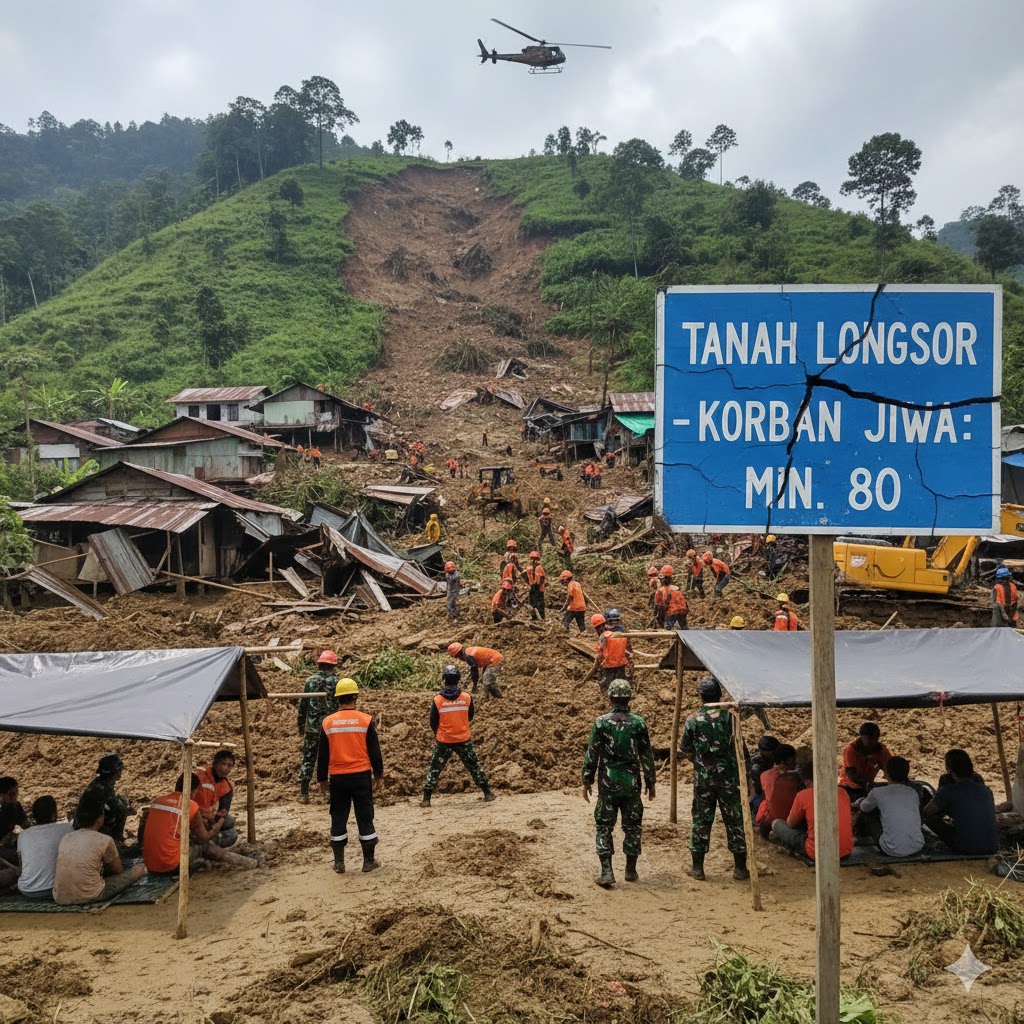
A powerful landslide triggered by days of torrential rain has killed at least 80 people in Indonesia’s West Java province, with dozens more feared trapped beneath tons of mud and debris, according to local authorities.
The landslide struck a mountainous area in West Bandung regency, where prolonged heavy rainfall caused saturated hillsides to collapse without warning. Entire homes were buried, and sections of the village were wiped out within minutes, leaving families shattered and rescue teams racing against time.
Rescue Operations Hampered by Dangerous Conditions
Indonesia’s disaster response agency says search and rescue teams, supported by the military and police, have been working around the clock. However, operations have been severely hampered by unstable ground, thick mud, and continuing rain, which raises the risk of further landslides.
Rescuers are using heavy machinery where possible, alongside manual digging and search dogs. Officials say the death toll may continue to rise as more bodies are recovered and as hopes of finding survivors diminish.
“We are facing extremely difficult conditions,” one rescue official said. “The soil is still moving, and safety remains our top concern.”
Homes Destroyed, Communities Displaced
Dozens of houses were completely buried, forcing nearby residents to flee to temporary shelters. Survivors described hearing a loud roar moments before the hillside gave way, leaving little time to escape.
Many families have lost not only their homes but also relatives, livestock, and livelihoods. Emergency shelters have been set up, providing food, medical care, and psychological support to those displaced.
Seasonal Rains and Growing Risk
Indonesia is currently in the peak of its rainy season, which regularly brings floods and landslides, particularly in mountainous and deforested regions. Experts warn that climate change is intensifying rainfall patterns, increasing the frequency and severity of such disasters.
West Java is especially vulnerable due to steep terrain, dense population, and land use practices that can weaken natural slopes.
A Disaster-Prone Nation
Indonesia, an archipelago of more than 17,000 islands, is one of the most disaster-prone countries in the world. It lies along the Pacific “Ring of Fire” and is frequently hit by earthquakes, volcanic eruptions, floods, and landslides.
In recent years, landslides triggered by heavy rain have claimed hundreds of lives across the country, highlighting the urgent need for stronger early-warning systems and improved land management.
Authorities Issue Warnings
Officials have urged residents living near hillsides and riverbanks to remain alert and to evacuate immediately if signs of ground movement appear, such as cracks in the soil or unusual sounds.
As recovery efforts continue, the tragedy has once again underscored Indonesia’s vulnerability to extreme weather and the devastating human cost of natural disasters.