A series of deadly explosions has shaken northeastern Nigeria, underscoring persistent security challenges in a region long affected by insurgency.
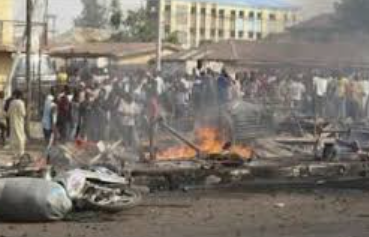
The blasts occurred in Maiduguri, the capital of Borno State, leaving at least 23 people dead and scores more injured, according to local authorities and emergency responders. The attacks struck crowded civilian areas, intensifying fears among residents already living under the shadow of prolonged conflict.
Witnesses reported multiple explosions in quick succession, targeting busy locations including a market and areas near major public facilities. Emergency services rushed to the scene, transporting victims to nearby hospitals where medical personnel struggled to cope with the sudden influx of casualties.
Security officials say the explosions are believed to be coordinated suicide attacks, a tactic frequently used by insurgent groups operating in the region. Although no group has formally claimed responsibility, suspicion has fallen on Boko Haram, the extremist group behind years of violence in northeastern Nigeria.
The latest incident highlights concerns about a possible resurgence of militant activity in the area. Despite sustained military operations, attacks on both civilians and security forces have continued intermittently, raising questions about the long-term effectiveness of counterinsurgency efforts.
Local authorities have condemned the attacks and pledged to strengthen security measures across the state. Residents have been urged to remain vigilant as investigations continue and security forces increase patrols in vulnerable areas.
For many in Maiduguri and across Borno State, the explosions serve as a grim reminder that, despite periods of relative calm, the threat of violence remains ever-present. Analysts warn that without sustained security reforms and humanitarian support, the region could face renewed instability.
As Nigeria confronts these ongoing challenges, the international community will be watching closely, particularly given the broader implications for regional security in West Africa.