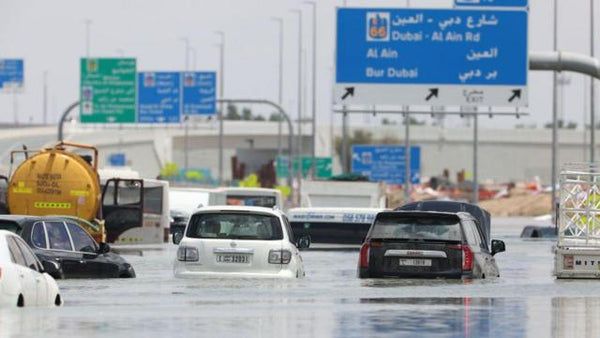
🌧️ What Happened
- Record rainfall: Heavy downpours swept across Dubai, Abu Dhabi, Sharjah, and Ajman, overwhelming drainage systems and flooding major roads.
- Public safety alerts: Dubai Police sent emergency messages urging residents to stay indoors unless absolutely necessary until midday Friday.
- Air travel disruption: Emirates airline canceled at least 13 flights, while dozens more were delayed across Dubai and Sharjah airports.
- Urban flooding: Streets near landmarks like the Burj Khalifa were submerged, with residents wading through knee-deep water.
⚠️ Human and Economic Impact
- Daily life disrupted: Schools and offices closed, and motorists were warned to avoid valleys, beaches, and flood-prone areas.
- Regional effects: Neighboring Gulf states, including Saudi Arabia and Qatar, also experienced heavy rainfall, with one Arab Cup football match canceled due to flooding.
- Infrastructure strain: The storm highlighted vulnerabilities in Dubai’s drainage and flood management systems, raising questions about climate resilience.
🌍 Meteorological Context
- The UAE’s National Centre of Meteorology (NCM) confirmed the storm was part of the “Al Bashayer” low-pressure system, bringing thunderstorms, hail, and strong winds.
- Conditions are expected to gradually improve from Saturday, with lighter rain and calmer seas forecast.
📌 Looking Ahead
- Authorities are urging residents to remain cautious until weather stabilizes.
- The storm has reignited debate over climate change and extreme weather preparedness in the Gulf, where rare but intense rainfall events are becoming more frequent.