
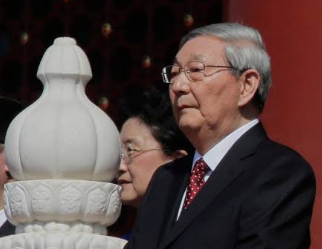
Zhu Rongji, the former Chinese premier who drove sweeping reforms of state-owned industry and led the country into the World Trade Organization, has died, state media reported Wednesday. He was 98.
Zhu died in Beijing at around 11 a.m. local time after treatment for an unspecified illness failed, the official Xinhua News Agency said.
Zhu served as premier, China’s top economic post, from 1998 to 2003 under then-President Jiang Zemin. Known for his blunt style, he pushed through wrenching restructuring of state-owned enterprises during the 1990s, a campaign that cost tens of millions of workers their jobs but helped modernize China’s economy and set the stage for its rise to become the world’s second-largest, overtaking Japan in 2010.
He was also a chief architect of China’s accession to the World Trade Organization in 2001, a milestone that opened the country’s economy to global trade and investment.
Zhu’s demanding approach and willingness to criticize official corruption and mismanagement earned him a reputation as a reformer unafraid of confrontation with party conservatives and industry leaders, along with nicknames including “Boss” and “Madman Zhu.” He famously vowed in 1998 to fight graft regardless of personal cost, saying he had prepared “100 coffins” for the effort — 99 for corrupt officials and one for himself.
Earlier in his career, Zhu was purged and sent to do manual labor in rural China after criticizing Communist Party policy, before returning to prominence during the reform era. He ranked third in the party hierarchy during his premiership, behind Jiang and National People’s Congress chairman Li Peng, though he lacked an independent power base within the party.