India’s Power Ministry approved the export of as much as 654 megawatts of electricity to Nepal for 18 hours a day, running from September 13 through December 31, to help its neighbor cope with a severe shortfall after floods wrecked hydropower infrastructure last month.
The ministry said supply would flow through two cross-border transmission lines — up to 600 MW via the Muzaffarpur-Dhalkebar line and up to 54 MW via the Tanakpur-Mahendranagar line — between midnight and 6 p.m. daily. Officials said the volume of power to be sent from January onward would be reassessed in December.
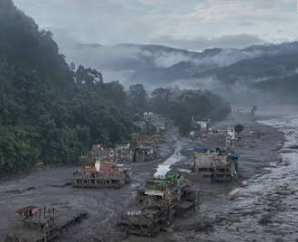
The move follows catastrophic flooding on Nepal’s Bhotekoshi River in late August, triggered by a glacier collapse, that killed nearly 1,400 people across Nepal and Tibet and knocked out more than a dozen hydropower plants — including the Trishuli 3A, Devighat and Middle Trishuli Ganga stations, along with the country’s largest solar facility. Nepal Electricity Authority officials said the disaster wiped out roughly a tenth of the country’s generation capacity and forced it to halt its own power exports, creating a shortfall of 350-400 megawatts even as the current rainy season would normally have Nepal exporting surplus hydropower rather than importing it.
NEA acting managing director Dirghayu Kumar Shrestha said Kathmandu had specifically requested the extra Indian supply to help manage the coming dry season, when Nepal’s hydropower output typically drops and the country becomes reliant on imports regardless. India’s Power Ministry called the move a reflection of longstanding energy cooperation between the two countries.
Nepal’s government has put the flood reconstruction bill at roughly $4.78 billion, and Prime Minister Balendra Shah has said he intends to press the international community on the disaster’s ties to climate change. More than 5,300 people, including several hundred power-station workers, remain unaccounted for.