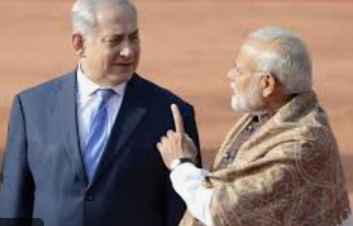
The Prime Minister of India, Narendra Modi, has arrived in Israel for a high-level diplomatic visit that underscores the growing strategic partnership between the two nations. The trip comes at a sensitive moment in Middle Eastern geopolitics, drawing global attention to both its symbolism and substance.
Modi’s visit reflects the steady expansion of India–Israel relations over the past decade, particularly in defense and technology. Israel has emerged as one of India’s key defense suppliers, with cooperation spanning missile systems, surveillance technology, and cybersecurity. Analysts expect discussions during the visit to reinforce military collaboration while also exploring emerging security challenges in the region.
Beyond defense ties, economic and technological engagement forms a central pillar of the bilateral relationship. Trade between the two countries has diversified into pharmaceuticals, agriculture, water management, and advanced innovation sectors. Israel’s expertise in water conservation and desert farming techniques aligns closely with India’s climate resilience and food security priorities, making technological exchange a strategic necessity rather than merely a diplomatic gesture.
The visit also carries broader geopolitical implications. India has historically balanced its strong ties with Israel alongside longstanding relationships with Arab nations. New Delhi continues to advocate for dialogue and stability in the region while maintaining an independent foreign policy approach. Modi’s presence in Israel signals India’s intent to engage actively with key regional players without compromising its diplomatic equilibrium.
Observers note that India’s global positioning has evolved significantly in recent years. As one of the world’s fastest-growing major economies and an increasingly influential geopolitical actor, India has sought to deepen strategic partnerships across multiple regions. Strengthening ties with Israel fits within a broader framework aimed at expanding defense capabilities, accelerating technological advancement, and enhancing economic diversification.
While specific agreements from the visit are expected to be detailed in official statements, the trip itself highlights India’s expanding diplomatic footprint. In an era marked by shifting alliances and regional instability, Modi’s arrival in Israel underscores the importance both nations attach to their partnership and the strategic calculations shaping their cooperation.
As regional tensions continue to influence global diplomacy, the outcomes of this visit will likely resonate beyond bilateral relations, reflecting India’s growing role in shaping international engagement across the Middle East and beyond.