Iran launched a barrage of missiles at American forces in the Middle East early Wednesday as the United States partnered with Saudi Arabia to strike Tehran-backed militias in neighboring Iraq, killing at least 20 fighters, in a sharp flare-up that raised fresh fears of a return to all-out war after several days of relative calm.
The Popular Mobilization Forces, a coalition of mostly Shi’ite, Iran-backed armed groups officially under the command of Iraq’s military, said at least 20 of its fighters were killed and 32 wounded in overnight air strikes carried out by American and Saudi fighter jets against logistics and weapons sites in eastern Iraq. Two Iraqi militia officials, speaking on condition of anonymity, told the Associated Press that six Iranian military advisers were also killed in the strikes, though it was not immediately clear whether they were included in the reported militia death toll.
The U.S. military said the strikes were carried out in response to drone attacks Saudi Arabia has blamed on the Iraq-based militias, which Riyadh has accused of targeting its oil facilities over the past two days. An umbrella group representing the militias initially denied responsibility, while Yemen’s Houthi movement, a separate Iran-aligned faction, said it had carried out its own, related attacks on Saudi energy infrastructure. Saudi Arabia’s Defense Ministry said the kingdom was not seeking to escalate the conflict but would respond to any aggression against it.
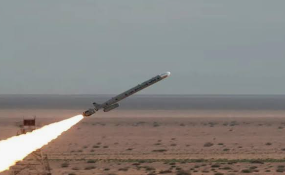
In response, Iran’s Revolutionary Guard said it had fired a wave of missiles targeting American forces stationed across the region. Jordan’s military said it intercepted and destroyed five of the missiles over its territory, with no casualties or damage reported there. It was not immediately clear whether any of the remaining missiles struck their intended targets.
The exchange marked a significant escalation after mediators had expressed cautious optimism in recent days about restarting negotiations between Washington and Tehran. An interim agreement aimed at de-escalating the five-month war collapsed in prior weeks amid renewed fighting in the Strait of Hormuz, the critical global energy corridor that Iranian attacks have again largely shut down. A regional official said mediators were continuing efforts to calm both sides and revive the stalled ceasefire framework.
Financial markets reacted immediately to the flare-up. Brent crude, the international benchmark, jumped 3.1% to $84.58 a barrel following the strikes. The broader war, now in its fifth month, has repeatedly rattled global oil markets and pushed up gasoline prices in the United States, adding to concerns in Washington about the conflict’s economic toll and its standing with an American public that polls show has grown increasingly weary of it.
The Popular Mobilization Forces trace their origins to the 2014 fight against Islamic State militants who had seized large parts of Iraqi territory. Iraq’s government later designated the coalition an “independent military formation” within the country’s armed forces, but in practice the constituent militias retain substantial autonomy and, in several cases, close ties to Tehran.