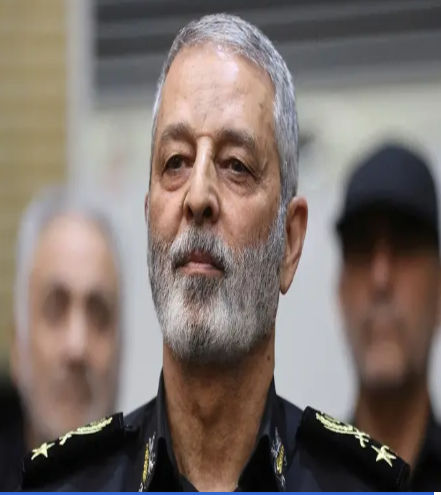
Iran’s Chief of Staff of the Armed Forces, Major General Abdolrahim Mousavi, has been killed along with several senior military commanders during coordinated strikes carried out by the United States and Israel, according to official reports and regional media sources.
The development represents a major escalation in the ongoing conflict and delivers a significant blow to Iran’s military leadership structure.
Senior Military Leadership Targeted
Iranian authorities confirmed that Mousavi was among high-ranking officers killed during strikes targeting military command facilities and strategic infrastructure across the country.
As Chief of Staff of Iran’s Armed Forces, Mousavi oversaw coordination between the country’s regular military, the Islamic Revolutionary Guard Corps (IRGC), and national defense operations. Analysts describe his role as central to Iran’s wartime command structure.
The strikes reportedly focused on command-and-control centers believed to direct missile operations and regional military activities.
Strategic Impact on Iran’s Military
The loss of multiple senior generals is expected to temporarily disrupt Iran’s military coordination and strategic planning.
Defense experts say targeting leadership figures can weaken operational decision-making in the short term, though Iran’s decentralized military structure may allow rapid replacement of commanders.
Iran’s leadership condemned the attacks, describing them as an act of aggression and vowing continued retaliation against U.S. and allied targets in the region.
Escalating Conflict
The killing comes amid rapidly intensifying hostilities following earlier U.S.–Israeli operations and subsequent Iranian retaliatory missile and drone strikes targeting American military bases and allied infrastructure across the Middle East.
Regional militaries remain on high alert as fears grow that continued exchanges could expand into a broader regional war.
Airspace restrictions, military deployments, and diplomatic warnings have increased across the Gulf and neighboring regions.
International Reaction
Global leaders have called for restraint and renewed diplomatic engagement to prevent further escalation. Several governments warned that attacks targeting senior leadership figures risk deepening the conflict and reducing opportunities for negotiation.
Security analysts say the elimination of top commanders may harden positions on both sides, complicating diplomatic efforts.
What Comes Next?
Iran is expected to appoint interim military leadership quickly to maintain command continuity, while observers watch closely for signs of additional retaliation.
The coming days may prove critical in determining whether the conflict stabilizes or evolves into a prolonged regional confrontation with global consequences.