Real stories. Raw truth Fast accuracy

We cut through the spin and social media outrage to bring you deeply researched, independent journalism you can actually trust.

Libya signs production-sharing agreement with Chevron

Table of Content

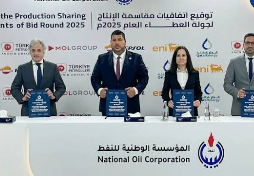
Libya’s National Oil Corporation (NOC) signed a production-sharing agreement on Monday with U.S. energy giant Chevron after awarding oil and gas exploration blocks to Chevron and other foreign oil companies earlier this year.

The agreement follows a series of steps building Chevron’s return to Libya. Chevron secured an onshore Sirte S4 license, also called Contract Area 106, in the NOC’s first oil and gas licensing round in nearly two decades, marking a strategic reentry into the country’s oil sector. That award had remained subject to execution of a formal production-sharing agreement, which NOC confirmed on Monday.

Chevron’s engagement in Libya has deepened over several months. The company separately signed a memorandum of understanding with NOC in January to evaluate onshore exploration and development potential, and in August signed a further memorandum covering a technical study of the offshore “NC 146” block. In April, Chevron and NOC also agreed to jointly study unconventional shale oil and gas resources across Libya’s Sirte, Murzuq and Ghadames basins, with estimated reserves of roughly 123 trillion cubic feet of gas and 18 billion barrels of oil.

The deals are part of a broader push by Tripoli to attract international investment back into its hydrocarbon sector. NOC’s February licensing round, its first since 2007, also awarded blocks to Eni, QatarEnergy and Aiteo, among others. Analysts noted that lingering uncertainty over Libya’s political fragmentation and security around the blocks kept the response smaller than expected.

Libya remains split between rival administrations in the east and west. In April, the country’s rival power centers reached a workable arrangement enabling passage of Libya’s first unified budget framework in over a decade, a fragile political thaw that oil majors are relying on to keep operations stable. Production has climbed to roughly 1.4 million barrels per day, its highest level in more than a decade, with officials targeting 1.6 million bpd by year-end and 2 million bpd further out.

support@paulkizitoblog.com

support@paulkizitoblog.com http://paulkizitoblog.com

Leave a Reply

Your email address will not be published. Required fields are marked *

Recent News

Trending News

Editor's Picks

Libya signs production-sharing agreement with Chevron

Libya’s National Oil Corporation (NOC) signed a production-sharing agreement on Monday with U.S. energy giant Chevron after awarding oil and gas exploration blocks to Chevron and other foreign oil companies earlier this year. The agreement follows a series of steps building Chevron’s return to Libya. Chevron secured an onshore Sirte S4 license, also called Contract Area 106, in the NOC’s first oil and gas licensing round in nearly two decades, marking a strategic reentry into the country’s oil sector. That award had remained subject to execution of a formal production-sharing agreement, which NOC confirmed on Monday. Chevron’s engagement in Libya has deepened over several months. The company separately signed a memorandum of understanding with NOC in January to evaluate onshore exploration and development potential, and in August signed a further memorandum covering a technical study of the offshore “NC 146” block. In April, Chevron and NOC also agreed to jointly study unconventional shale oil and gas resources across Libya’s Sirte, Murzuq and Ghadames basins, with estimated reserves of roughly 123 trillion cubic feet of gas and 18 billion barrels of oil. The deals are part of a broader push by Tripoli to attract international investment back into its hydrocarbon sector. NOC’s February licensing round, its first since 2007, also awarded blocks to Eni, QatarEnergy and Aiteo, among others. Analysts noted that lingering uncertainty over Libya’s political fragmentation and security around the blocks kept the response smaller than expected. Libya remains split between rival administrations in the east and west. In April, the country’s rival power centers reached a workable arrangement enabling passage of Libya’s first unified budget framework in over a decade, a fragile political thaw that oil majors are relying on to keep operations stable. Production has climbed to roughly 1.4 million barrels per day, its highest level in more than a decade, with officials targeting 1.6 million bpd by year-end and 2 million bpd further out. support@paulkizitoblog.com